
The penultimate day of our travels began at 8:30am sharp after a buffet breakfast in Rethymno, Crete. We travelled by bus to the Archaeological site of Aptera. A significant city state, Aptera rose to power due to its control of the two neighbouring ports, Minoa and Kisamo. The site featured massive Roman cisterns as the mountainous area had no springs, and in order to survive, they needed to preserve the rainwater from the winter months. Directly across from the cisterns was one of the bathhouses. Its architecture was particularly interesting as the Romans skillfully managed to have both hot and cold saunas as a result of underground hot stone pillars, heated in the basement by a furnace. The cold room was sectioned off in order to maintain its cold climate.
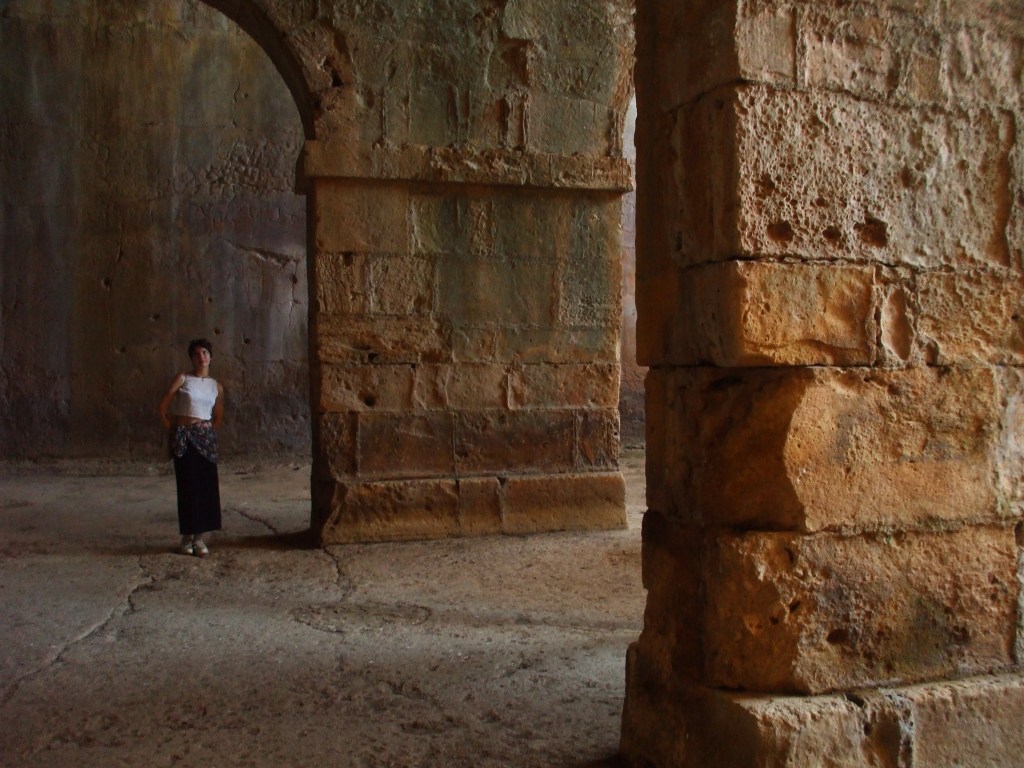
Thanks to Professor George’s innovation, we had an interactive performance and experience within the old Roman theatre, which even captured other onlookers. We learned how theatre was performed by existing within the space, rather than just looking and imagining what could or did happen.
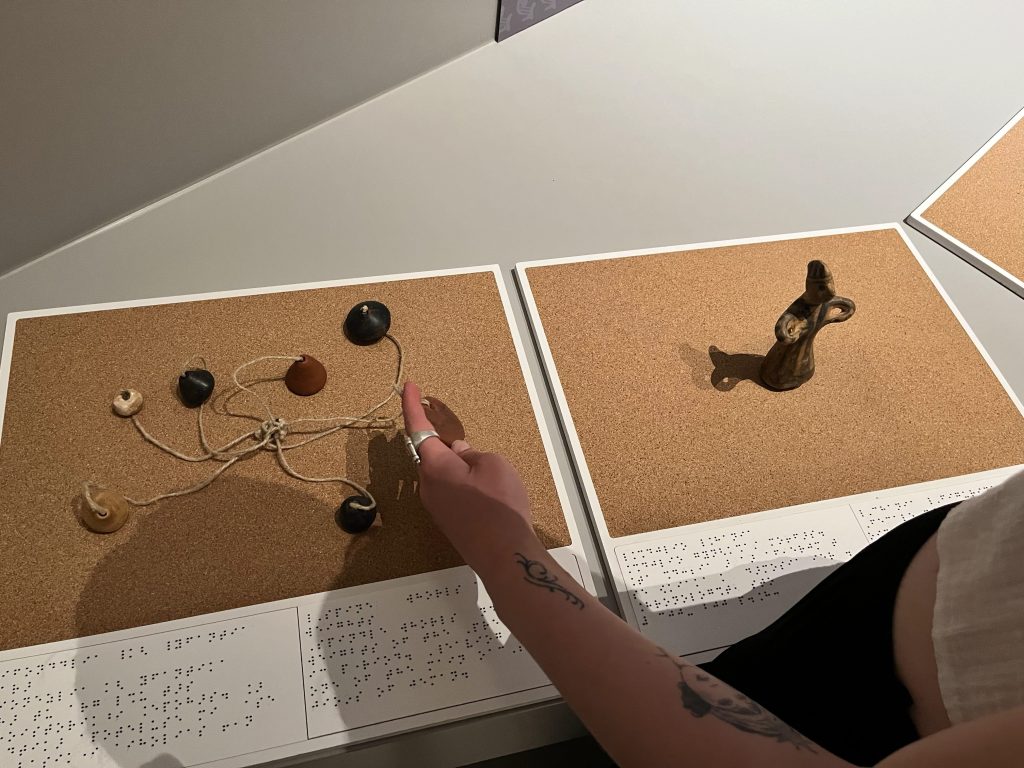
After Aptera, we visited the Archaeological Museum of Chania. The museum had a plethora of artifacts from the Palaeo and Neolithic eras, spanning to the Post Palatial Minoan era. It was a modern museum, with interactive exhibits and reconstructions. Its signage was elaborate and in-depth but made me wonder about how accessible museums could be. Eventually, I noticed the tactile reconstructions of ancient artifacts accompanied by braille signage. There were beads, pots, a lamp, and a rather large toy cart. I appreciated how interactive (and somewhat) accessible the museum was. It was a breath of fresh air compared to some of the more barren and undescriptive galleries and museums we had experienced earlier on in our trip. The modernized museums seem to put more effort into situating the viewer within the actual historical and physical context the artifacts belonged to with detailed reconstructions, rather than focusing solely on a viewing experience.
We were then shuttled to our accommodations for the evening, and enjoyed some free time before meeting up with Dr. Francis’ colleague and friend Jennifer Moody. We met her at the Ancient Ruins of Kydonia. Her lecture explored the dating of buildings through the investigation of charcoal remnants, worm infested cypress tree beams and their rings, as well as pollen. Her theories were interesting as they considered the humidity and climate of Crete and how that dictated the life the Minoan Cretans lived.
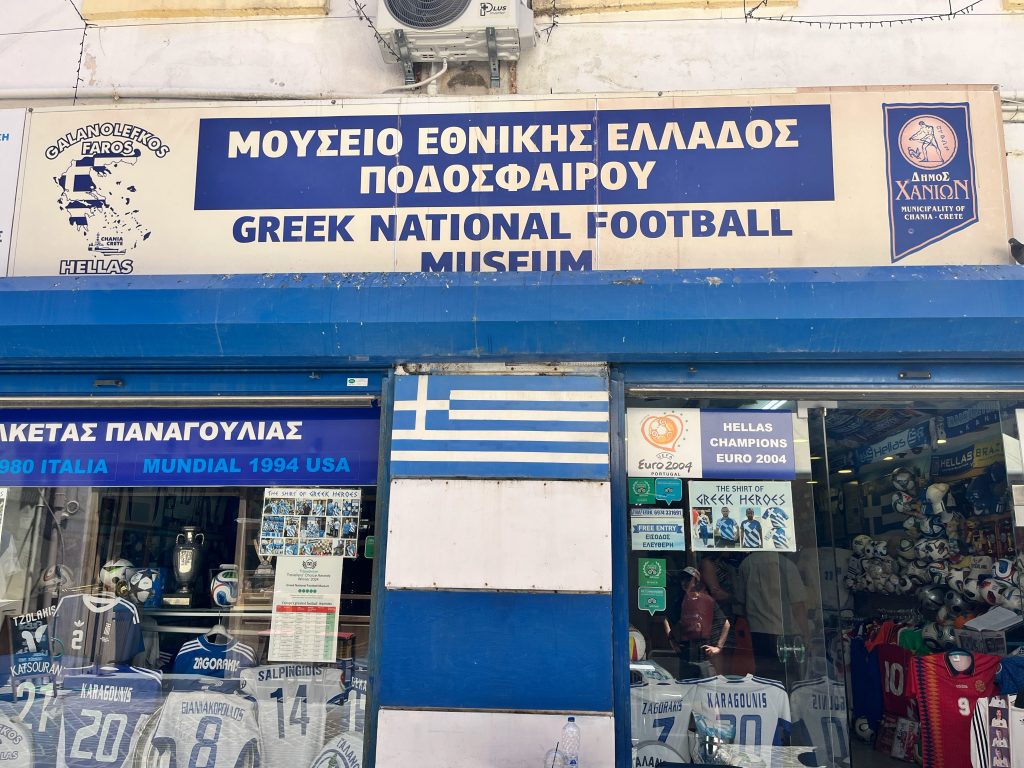
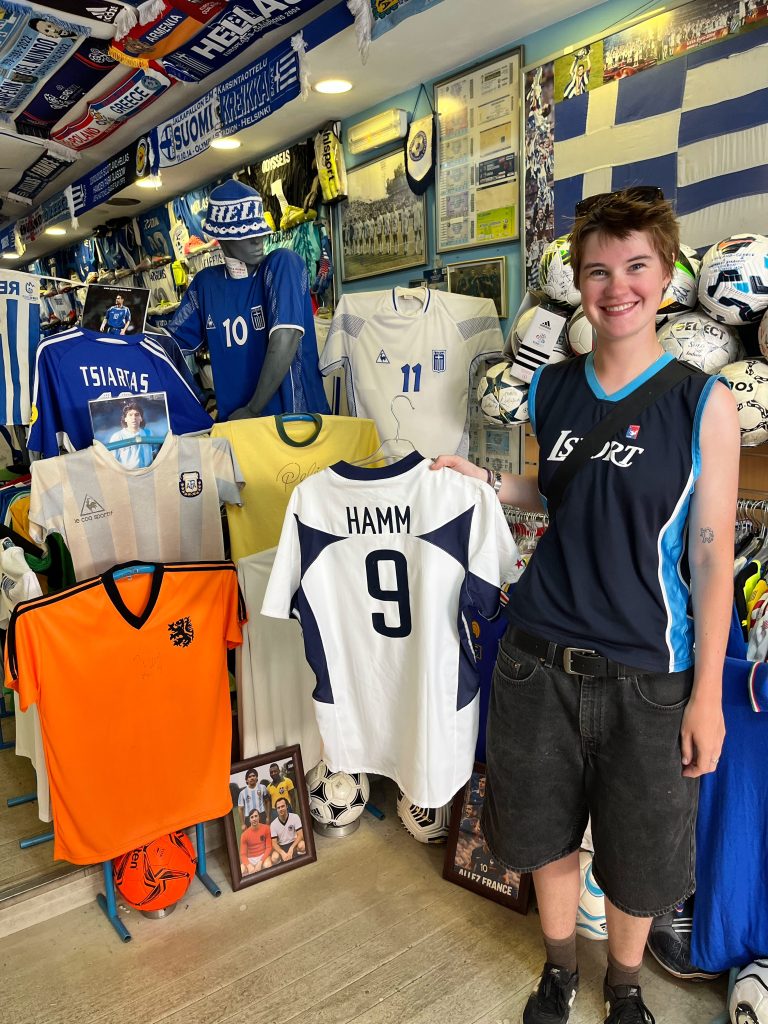
The most exciting part of the day for me occurred in our free time before our lecture with Dr. Moody. Doga and I set off to find a vintage jewelry and antique shop, and on our way there, we stumbled upon the National Greek Football Team Museum. At first glance, the museum looked chaotic. Jerseys and other football memorabilia covered every inch of the walls and floorspace. But when we entered, Mr. Nikos Flekkas asked enthusiastically where we came from, and proceeded to show me a jersey from Greek-Canadian goalkeeper Kyriakos Stamatopoulos. The most profound moment at his archive was when he showed me the jersey from (in his words), the “best female football player of all time”. Before he flipped the jersey around to show me the nameplate, the famous number nine was all I needed, and Mr. Flekkas and I exclaimed “…Mia Hamm” at the same time.
Usually, game worn jerseys are kept by collectors in pristine condition behind glass cases, folded precisely along seams to preserve the condition it was auctioned off in. However, Mr. Flekkas urged the jersey into my hands and asked me for my camera and proceeded to take many photos of me with the artifact. I could see dirt and sweat marks from the match on the kit, which are usually left untouched and carefully preserved for the rest of time. But Nikos’ insistence on me having the physical experience with the jersey was a one-of-a-kind moment for me.
Flekkas grabbed my hand and led us around the archive showing us vintage autographed game-worn Maradona and Péle jerseys, game-worn David Beckham kits, and old CCCP jerseys. He even had Zinedine Zidane’s 2006 World Cup finals jersey, adorned during his red-card ejection and subsequent end to his glorious career. Nikos even urged the 2004 Euro cup that Greece won into our hands and grinned while taking our photo.
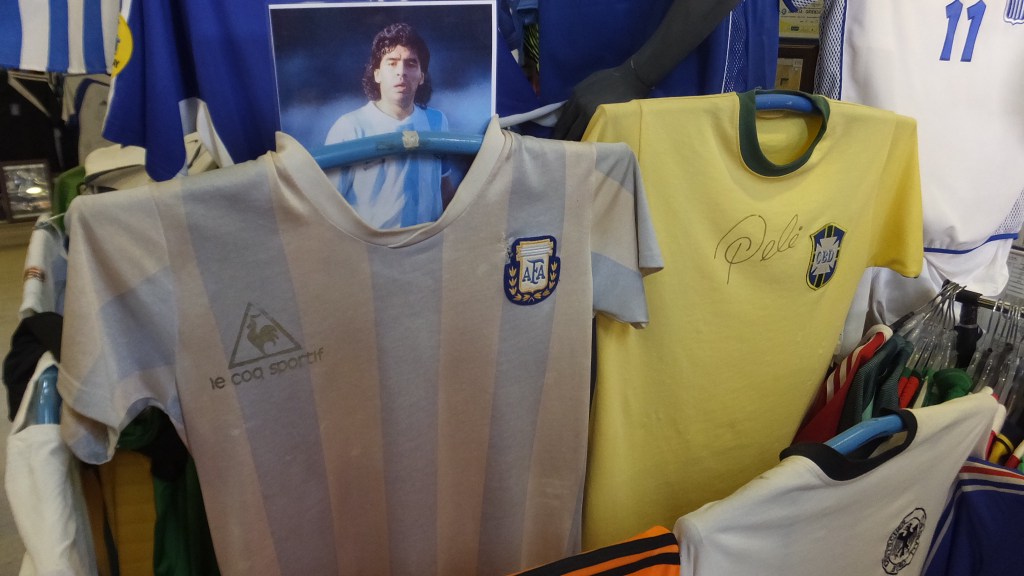
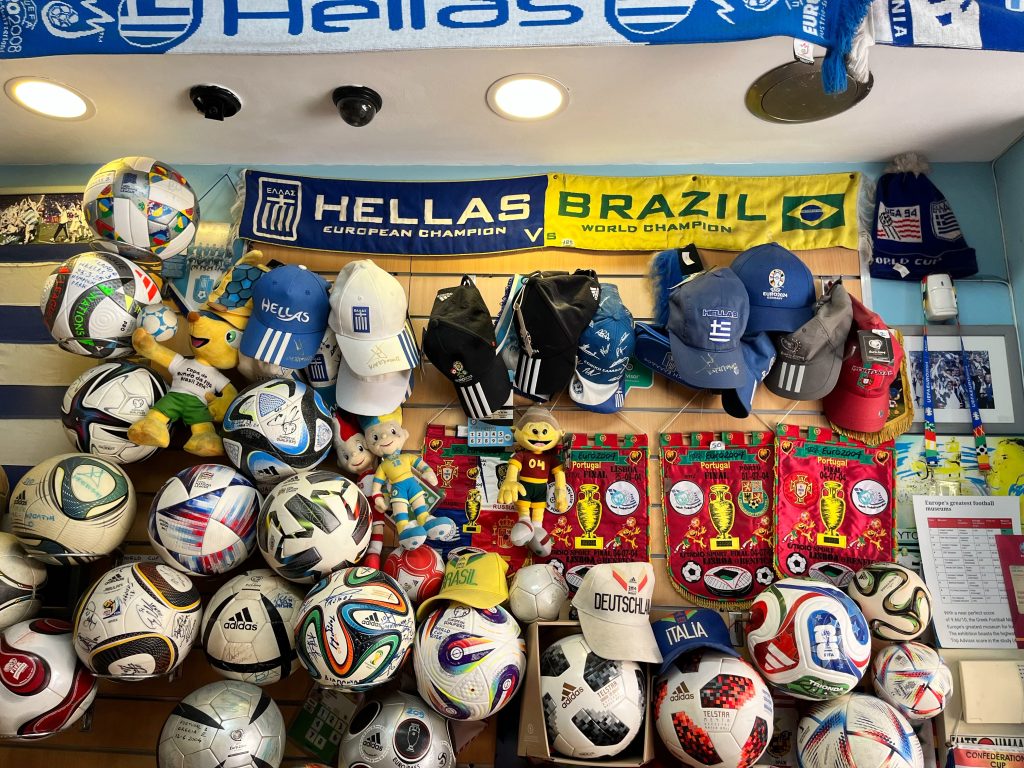
At the National Greek Football Team Museum the beautiful game is certainly honoured by a knowledgeable and passionate archivist. It’s easy to see how much Mr. Flekkas cares about the cultural impact of the sport by sharing that devotion with all who visit. He was especially pleased to hear that I play football and had some knowledge on the artifacts within his archive. Even if you’re not obsessed or interested in the sport, the National Greek Football Team Museum is a part of Chania that stands out as a result of Nikos’ dedication to chronicling Greek football history. Since the 2026 FIFA World Cup (hosted by Canada, USA, and Mexico) started today, I couldn’t help but think that stumbling upon this museum was the perfect opening ceremony for the next few intense weeks of football.
~Nat Roy
 Concordia CMLL Study Tour
Leave a comment