
We started our day off with a tour of the archaeological site of Malia. The site, right off the bat, was very impressive. It was really well preserved and allowed for a thorough understanding of the layout of a Minoan settlement. The plan of the site was really interesting because one of the main rooms was located in a close proximity to one of the main storage rooms, which held wine, olive oil, and other food items, which indicates that they had a strong sense of community. The Minoans prioritized large community spaces for banquets and meetings. The large fields and open areas created the opportunity for the Minoans to get together and grow their society. We got to explore the site and even could view Quartier Mu from above, in the form of a bridge that rocked when too many people walked on it.
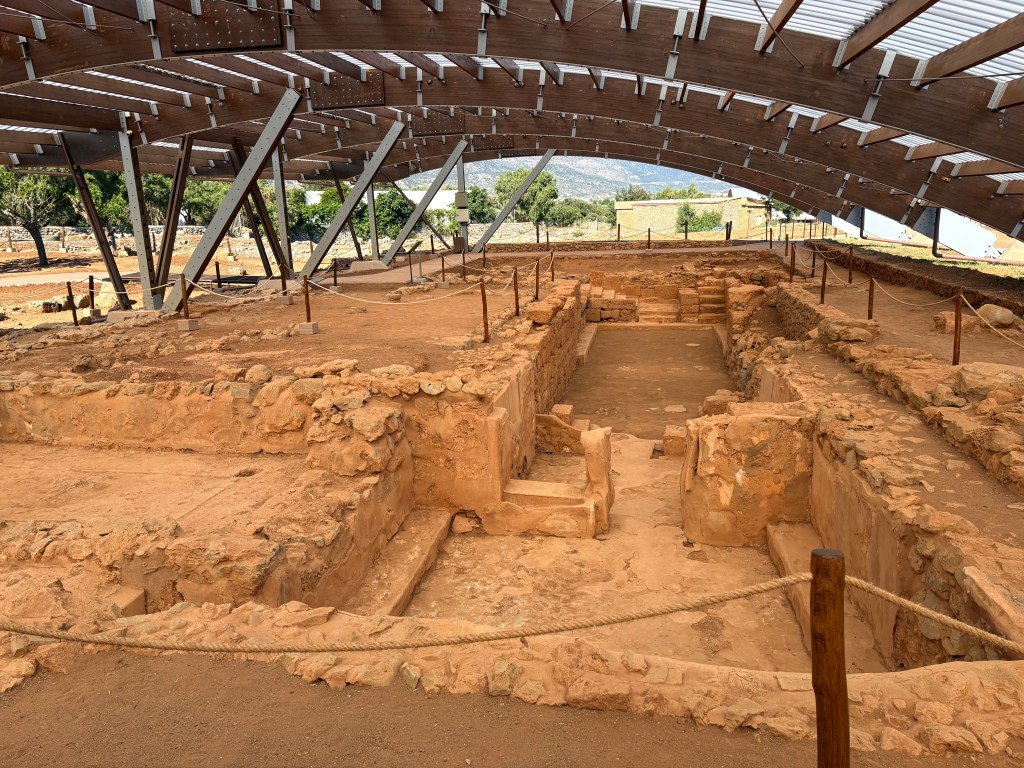
~Picture of a large room in the Hypostyle Crypt Malia
The site also included a palace which served as the main building at the site. It should be mentioned that a palace is not, for example, like Buckingham Palace where the king and queen live, but simply a building where it contains a central courtyard surrounded by four sections of rooms. The palace was very large and was used for meetings of both settlement issues and diplomatic relations. Within the palace was what is believed to be an altar which insinuates that they had a kind of religious belief.
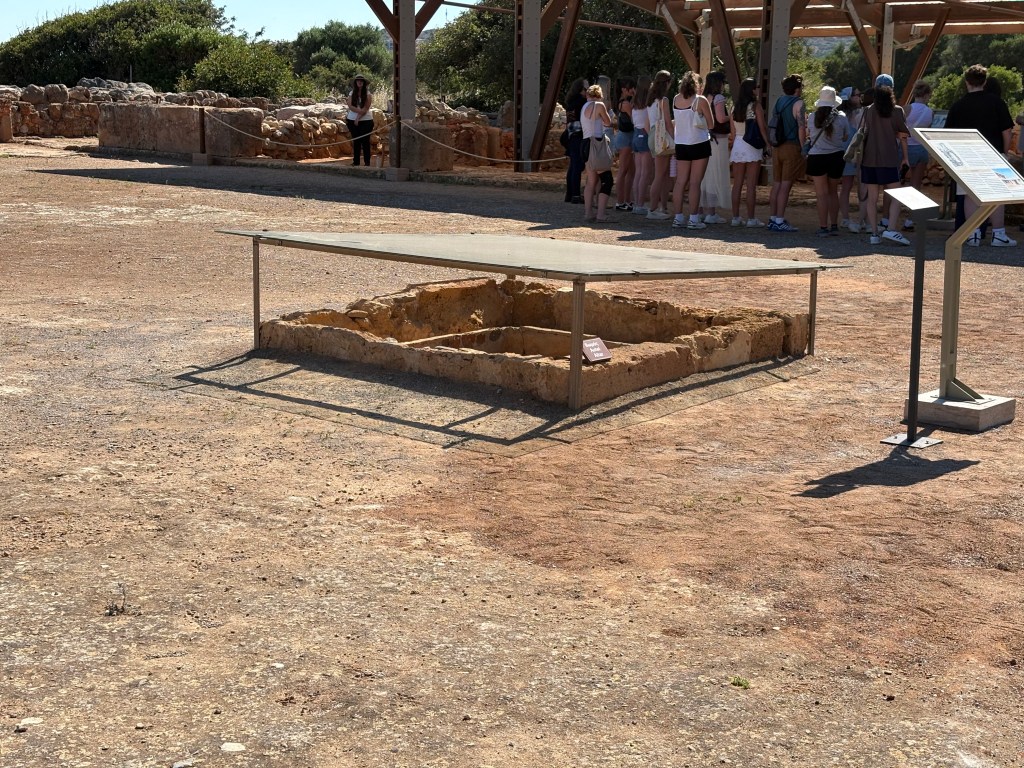
~Photo of the altar
After the tour in Malia, we took the bus to the archaeological site in Gournia. The site seemed to span all over the top of a large hill and has a very interesting history of excavation. The site started excavation in 1901 by Harriet Boyd Hawes and she became the first woman in Greece to lead an excavation. She was successful in her excavations which led to the discovery of the settlement of Gournia.
Gournia, similar to Malia, also cared about community and development. However, every house that was settled in Gournia was the same size, which implies that everyone who lived there lived the same and that no one was better off than the other. This creates a very strong sense of community because you see the same people everyday. While Gournia contained a palace, no one ever lived there, and was meant to be a large meeting room for community members. We got to walk along the roads that were made that all connected into the large courtyard of the palace.
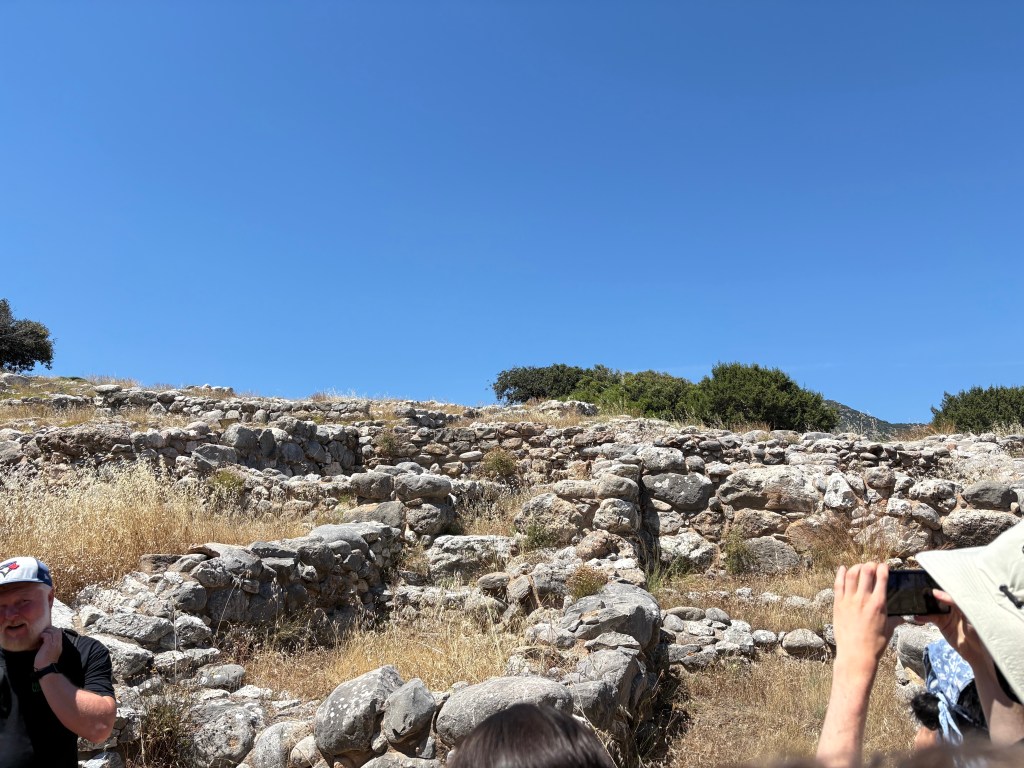
~Picture of the excavated remains of a building in Gournia
The people in Gournia also had a very strong sense of creativity and many artisans practiced their crafts out of their houses. Nearby, there were workshops that held things, like kilns, for the people to perfect their craft and have a place to work without getting their house full of smells and dirt. The people also relied heavily on trading for food, as they had little land to farm with, which emphasized their need to create.
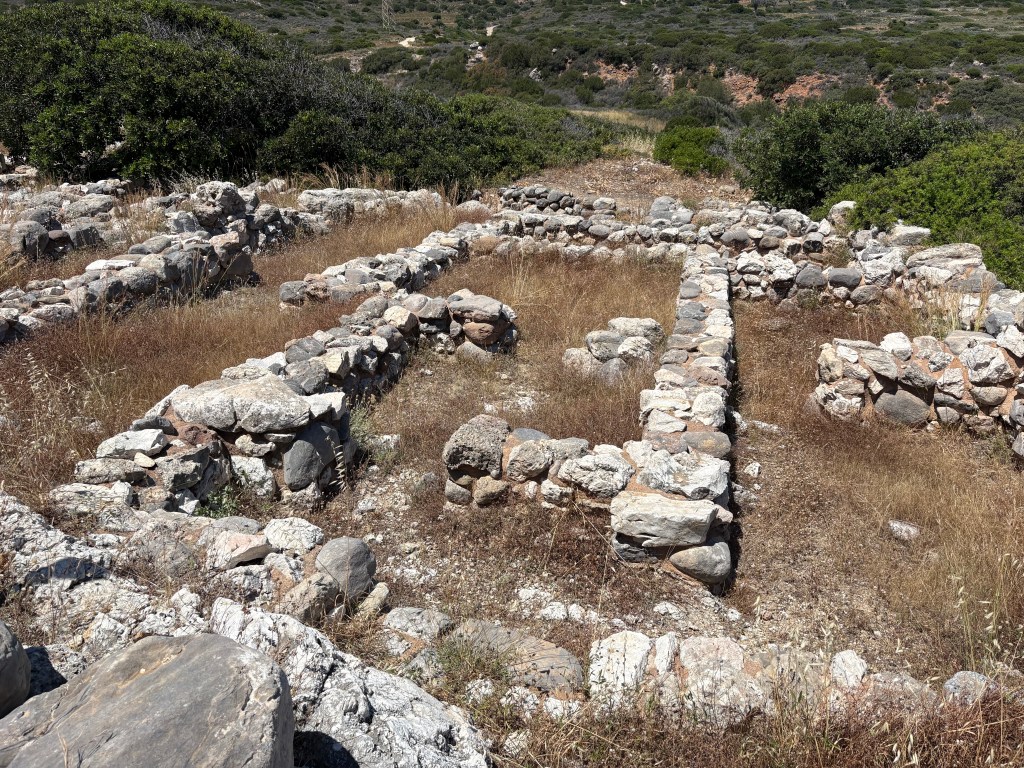
~Picture of the remains of a house in Gournia
Afterwards, we made our way to the Archaeological Museum of Aghios Nikolaos, which was not a very big museum, but was full of artifacts that were taken from sites like Gaurnia and Zakros, another city on Crete that was a Minoan civilization. This museum focused on the people who have excavated the sites and provided the museum with their findings while also finding out about how the Minoans lived
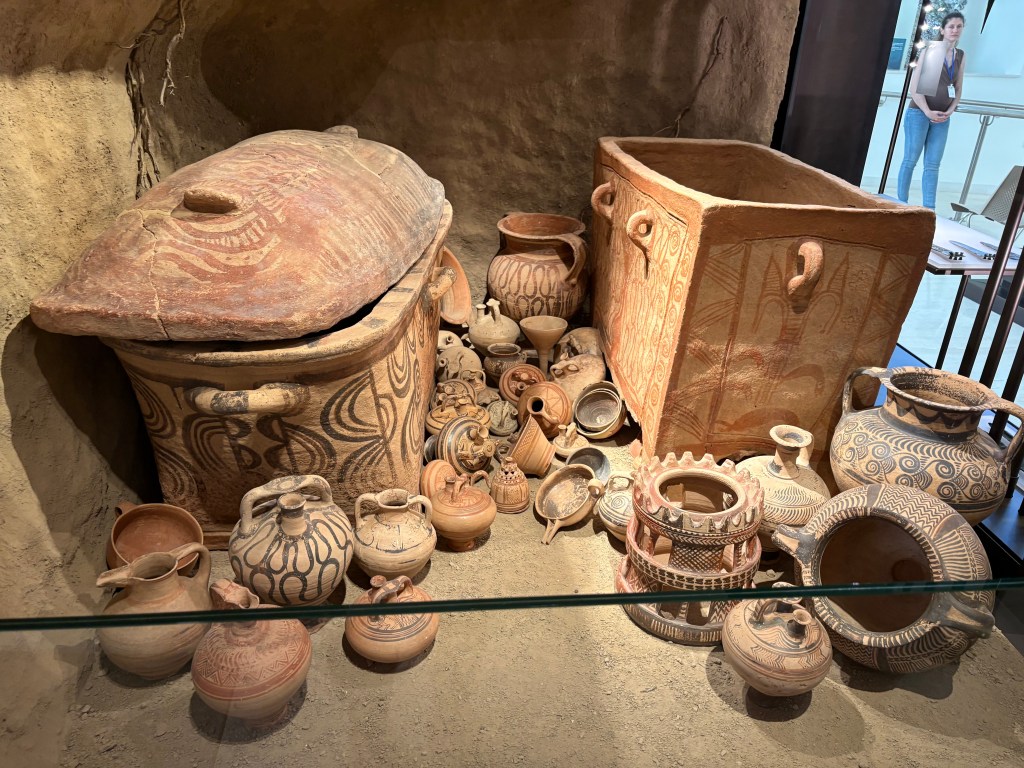
~Display of pottery and other ceramic pieces in the Aghios Nikolaos Archeological Museum
One thing that I want to point out about today was that the settlement of Gournia is where our professor, Dr. Matt Buell, has been excavating for the past twenty years. He gave us a very in depth tour, like we usually get throughout the trip, but this tour was different. Dr. Buell is, evidently, very passionate about this site and his knowledge about what they have excavated and the history of the site was fascinating. In the museum, there were many artifacts that Dr. Buell and his team have personally excavated and there was even a picture with him on a slideshow about the process of excavation in that area. I found this really interesting because we could learn in depth about something that our professor is passionate about and has a lot of information to share.
~Piper Gagne


Leave a Reply