
A Look at the Country’s Stray Cats
June 3rd, 2026
On a cloudy afternoon surrounded by the towering columns of the Temple of Zeus at the archaeological site of Nemea, Dr. Buell tried to give a lecture about the ruins before our eyes. However, the sound of his voice was quickly overtaken by quiet whispers and laughs as two young children played with a stray cat in the middle of the lecture. Despite standing among one of the most important sanctuaries of the ancient Greek world, it quickly became clear that half the class was paying more attention to the cat than to the lecture. Dr. Buell did his best to continue the lecture, though it was becoming increasingly clear that the cat had become the center of attention. Who could resist something so cute?
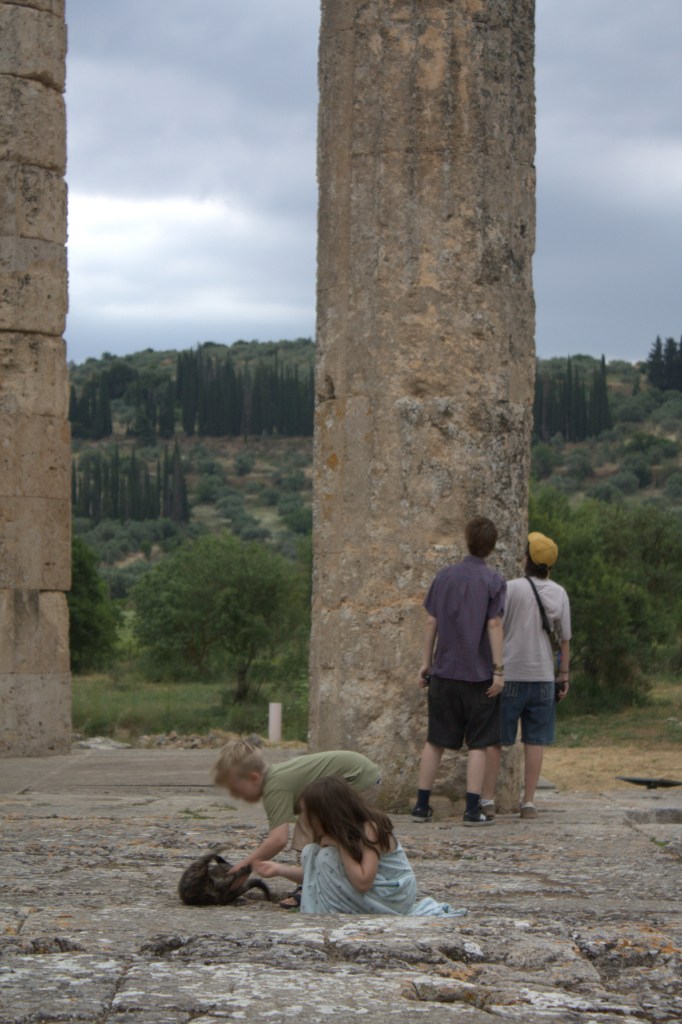
~Two children playing with a stray cat while Nat and Doğa admire a column at the Temple of Zeus.
Photo by author
By that point in the trip, the scene was hardly unusual. Whether we were exploring archaeological sites, wandering through city streets, visiting churches, or sitting down for dinner, cats seemed to be everywhere. They lounged in the shade of ancient monuments, slept on stone walls, wandered through courtyards, and occasionally followed us around in search of attention. It would be nearly impossible to write about my experience in Greece without mentioning the cats that have become such a recognizable part of everyday life throughout the country.
Rather than focusing on a single day, this post is really a collection of moments from the trip so far and some quick insight into the feline friends we see so often. More than once, our group found itself stopping to take photos of a particularly photogenic cat instead of whatever monument we had originally come to see. In fact, the first pictures on my camera from this trip are of kittens playing in the streets of Athens.
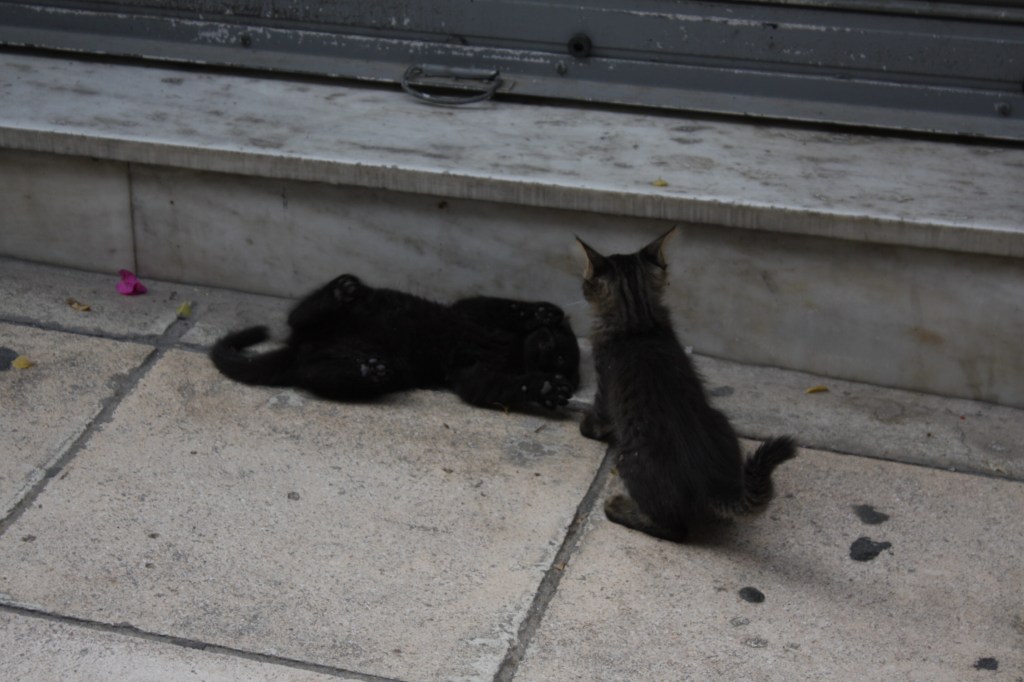
~Two stray kittens playing in the streets of Athens.
Photo by author
As charming as these encounters were, they also raised questions. Why are there so many cats in Greece?
Estimates suggest that Greece is home to between two and three million stray cats, one of the largest stray cat populations in Europe. The reasons are complex and include decades of uncontrolled breeding, pet abandonment, and limited access to sterilization programs in some areas. While exact numbers are difficult to determine, there is little doubt that the population is extraordinarily large.
For visitors, the abundance of cats often adds to the charm of traveling in Greece. They become unexpected companions during walks through archaeological sites and provide endless opportunities for photographs. However, the reality behind their presence is not always so picturesque. According to Animal Action Greece, the country’s oldest national animal welfare organization, overpopulation remains one of the greatest threats to the welfare of stray animals. Without population control, thousands of kittens are born each year into conditions where food, shelter, and veterinary care are limited. While some are cared for by local residents and business owners, many live difficult and relatively short lives, suffering from disease, injury, parasites, malnutrition, or exposure to extreme weather. Animal Action Greece argues that sterilization is the only humane and effective long-term solution because it prevents future suffering rather than simply treating symptoms.
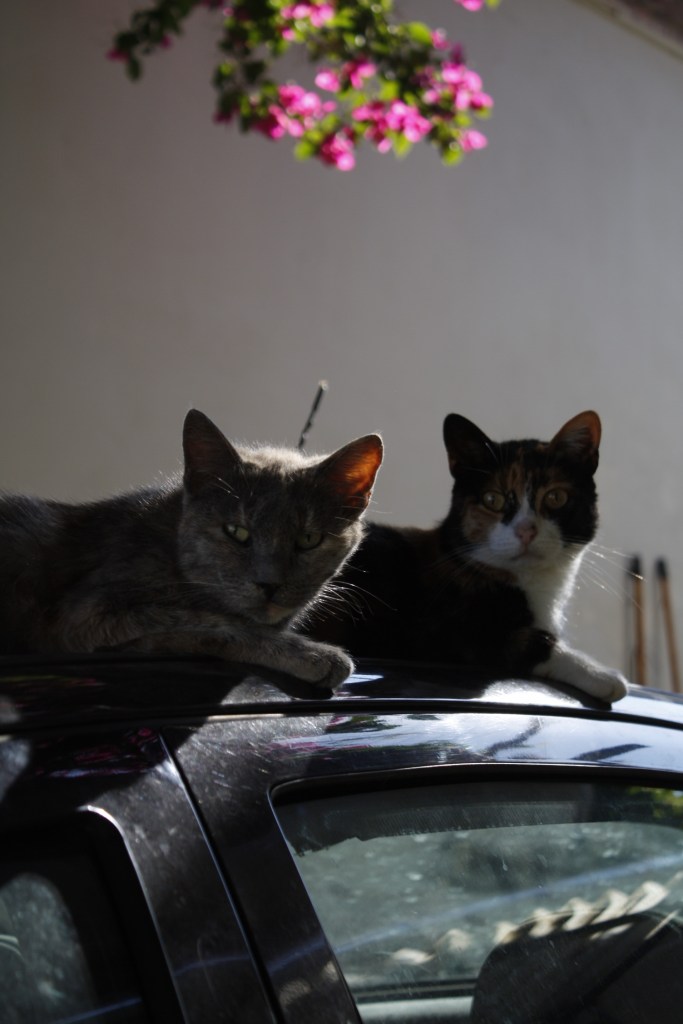
~Stray cats on top of a car in Nafplio.
Photo by author
Fortunately, numerous organizations throughout Greece are working to address the problem. Many focus on trap-neuter-return (TNR) or trap-neuter-vaccinate-return (TNVR) programs, in which cats are humanely trapped, sterilized, sometimes vaccinated, and then returned to their colonies. This approach helps prevent further population growth while allowing established cat communities to remain stable. Large organizations like Animal Action Greece and various local rescue groups also provide veterinary care, facilitate adoptions, and educate communities about responsible pet ownership.
In Athens, the volunteer organization Nine Lives Greece has worked exclusively with stray cats since 2006. Over the course of its operations, the organization has sterilized more than 21,000 cats, found homes for over 1,800 cats and kittens, and continues to feed more than 500 stray cats every day across the city. These numbers are impressive, but they also reveal the sheer magnitude of the issue. Even tens of thousands of sterilizations represent only a fraction of Greece’s overall stray population.
Programs like this found across Greece are designed not only to improve the lives of individual cats but also to address broader effects on communities. Large stray populations can contribute to the spread of disease among animals, create sanitation issues, and place significant financial burdens on volunteers and local organizations. Animal Action Greece notes that unmanaged populations frequently lead to cycles of starvation, injury, and illness among the cats themselves. TNR and TNVR programs seek to create stable colonies that gradually decline in size over time while remaining healthier overall.
Looking back on the first week of the trip so far, the cats became as memorable to me as many of the monuments and museums we visited. They were a constant presence, appearing in some of the most unexpected places and almost always drawing attention away from whatever historical site stood nearby. In Mystras, a cat came to sit on my lap while I was taking a break near the Pantanassa Monastery. I was disappointed to leave him behind and briefly considered whether anyone would notice if an extra passenger boarded the bus. And despite the Pantanassa Monastery being the part of the site I was most excited to see in person, this handsome young man stole the show.
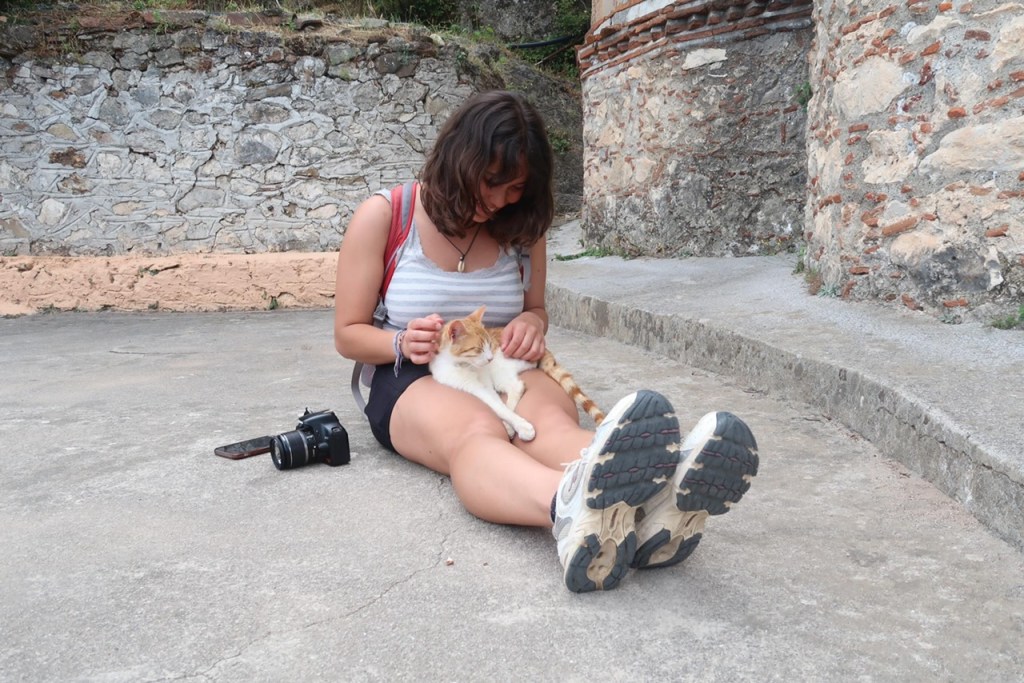
~Author with a stray cat outside the Pantanassa Monastery.
Photo by Doğa Afşar
The next time I see a cat sleeping peacefully beside a centuries-old monument, I will probably still stop to take a picture. But I will also remember that behind that charming image lies a much larger story of the ongoing problems of cat overpopulation and the efforts of countless individuals and organizations who are trying to improve the lives of Greece’s most famous residents.
~Alison Wolanyk
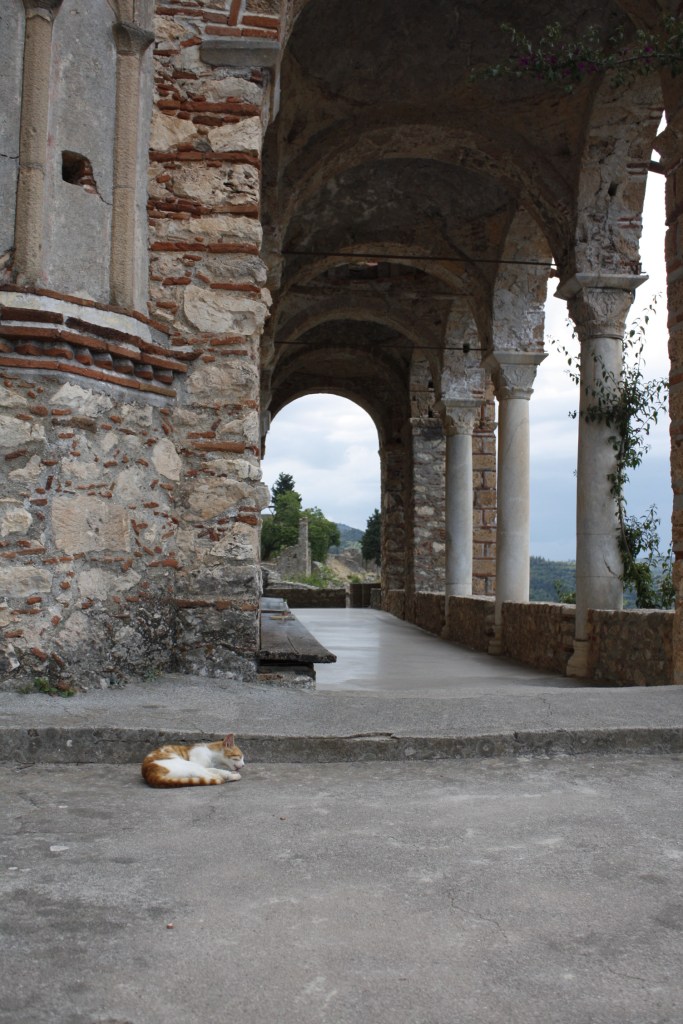
~Stray cat outside the Pantanassa Monastery.
Photo by author
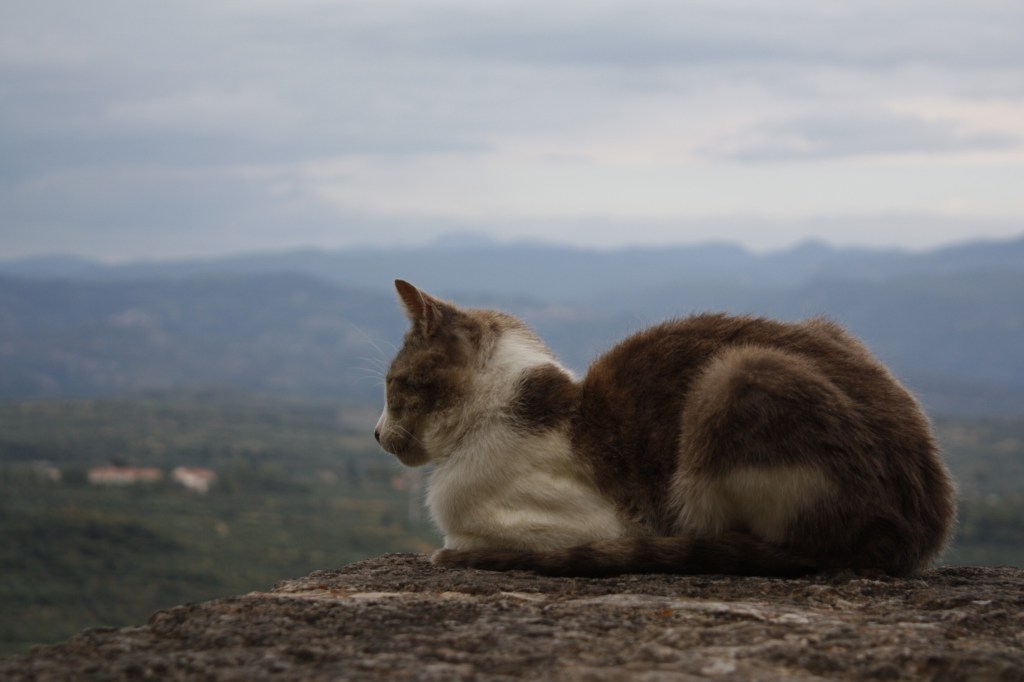
~Stray cat overlooking the site of Mystras.
Photo by author
Bibliography
Animal Action Greece. n.d. Animal Action Greece. https://www.animalactiongreece.org/.
Mykonos Animal Welfare. n.d. Mykonos Animal Welfare. https://mykonosanimals.org/.
Nine Lives Greece. n.d. Nine Lives Greece. https://www.ninelivesgreece.com/.
Paros & Antiparos Community Cat Care Project. n.d. Paros & Antiparos Community Cat Care Project. https://www.parosandantiparoscats.org/.
PAWS Paros Animal Welfare Society. n.d. PAWS Paros Animal Welfare Society. https://www.paws.gr/.
Zero Stray Pawject. n.d. Zero Stray Pawject. https://www.zerostraypawject.org/.


Leave a Reply