
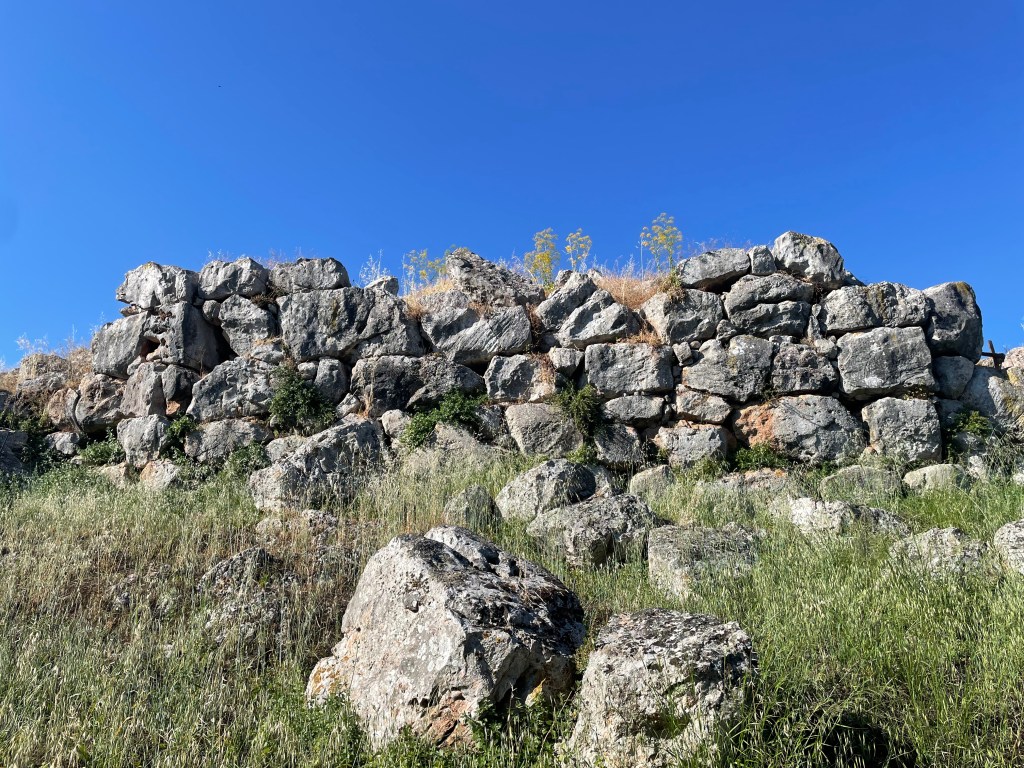
– Example of the Cyclopean masonry at Tiryns
Today was a tour of some of the highlights of the Argolid region: Tiryns, Mycenae, and Lerna, a very Heraclean tour, as Dr. Buell noted. The Hydra of Lerna which Heracles wrestled with, and both Tiryns and Mycenae ruled by his uncle, who sent him onto his infamous labours. The particular sites visited this day were the acropolis of Tiryns, the site of Mycenae, the tomb of Atreus, and the House of Tiles at Lerna.
Tiryns, which we started with, was immediately impressive from its topography and geography. Perched on top of a rocky hill lies the remains of what was an extremely fortified site of the Mycenaeans, complete with its so-called Cyclopean masonry, thick enough (about six metres wide) to support people standing on top of it to guard the entrance with their arrows. The location is also strategic for its (former) proximity to the sea, useful for the long-distance trade which the Mycenaeans would have engaged in.
Of particular interest to myself was the courtyards located near the megaron. There, people, after being led by the fortified walls up to the citadel, would’ve been welcome to a feast. The function of feasting is important in its ties to social cohesion, status, and bonds of debt. Those being hosted would’ve had some status in the community and being treated to food and drink by the wanax would have solidified this high regard. Additionally, the feasting creates bonds of debt, wherein those being hosted would feel the need to reciprocate the feast. The Mycenaean seemed to have a particular concern for hosting, and evidence for smaller venues may indicate that there was a group of elites at the time.
Indeed, the site at Tiryns shows evidence for a prosperous and well-managed people. Large settlements would have been located near the base of the acropolis, supplied by the fertile land of the region in agricultural growth. One interesting indication of this prosperity was the storage of sheep as livestock. While excavating, archaeologists found the walls of the galleries slick, and eventually found that it was due to lanolin in the sheeps’ wool rubbing against the walls. There is also evidence for strong perfumery and textile production taking place at the site.
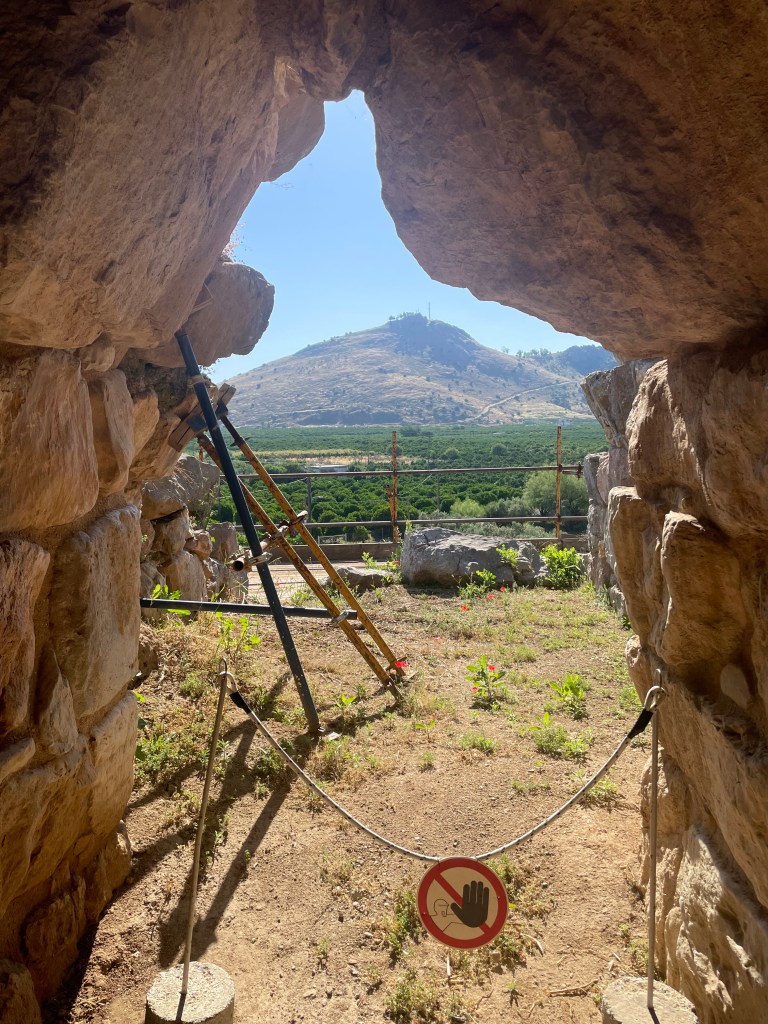
– The view from an arch at the gallery, Tiryns
In its heyday, the acropolis of Tiryns would have been an impressive site of political power, both to local residents and foreigners, concentrated at the top of a rocky hill overlooking the open waters of the area.
– Rosemarie Burla-Amatayakul


Leave a Reply