
By Jeremy Parkinson
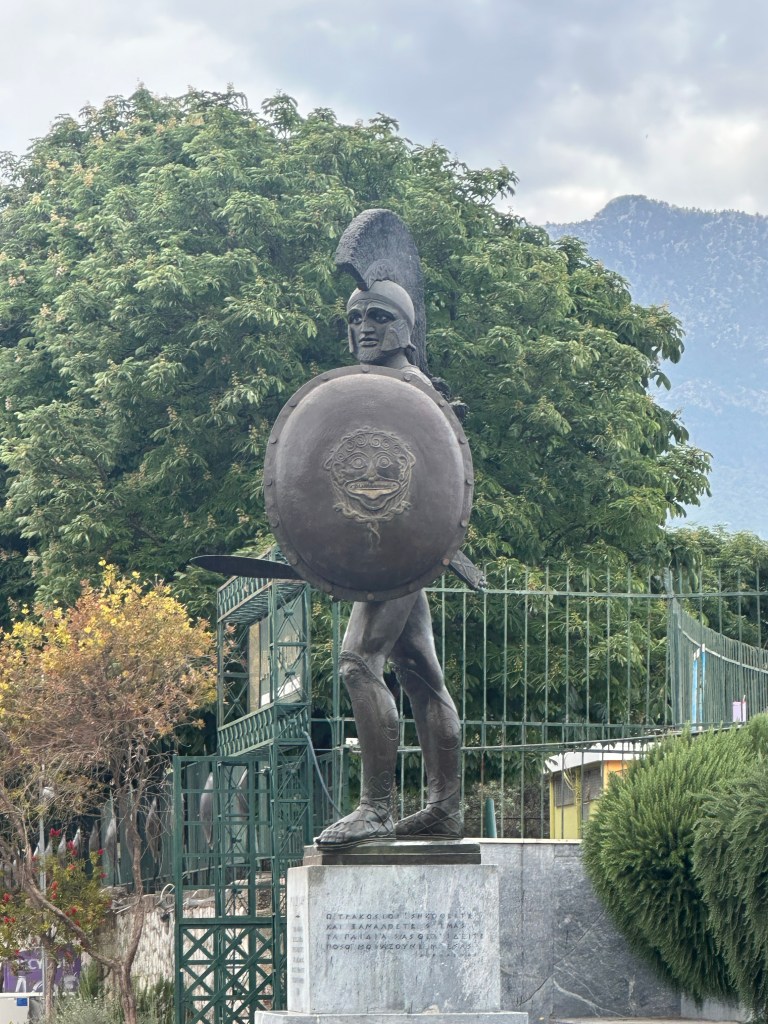
Today we woke up in Sparta to the smell of stagnant cigarette smoke in the hallways and lobby of our hotel. I took a deep breath of this stale morning air and exclaimed to myself “This is Sparta!” realizing that what will not kill us can only make us stronger and more able to endure the battles that lie ahead. As we walked through mostly empty streets while being growled at by ferocious dogs penned behind fences we reached our first destination of the day, the temple of Artemis Orthia, which we found overgrown with weeds and inaccessibly locked behind a rusty gate. After Katerina gave a very informative presentation about the temple that included a disturbing section about the education of young Spartan boys it was time to move along from Sparta and on to greener pastures.
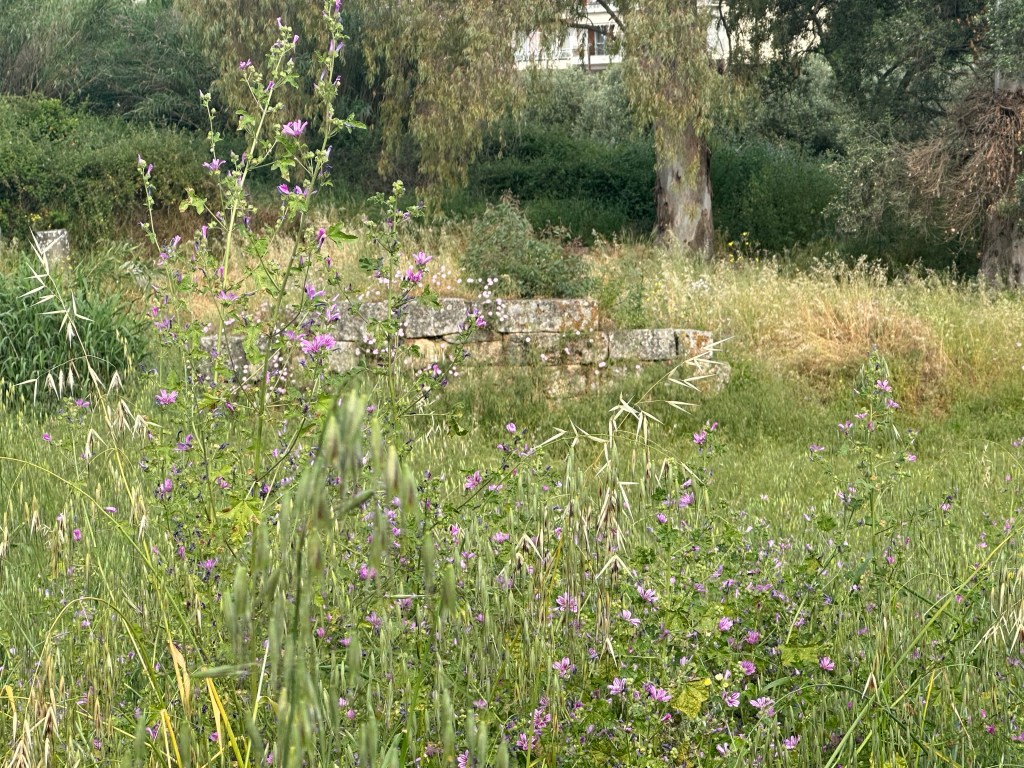
The bus ride from Sparta to Pylos took approximately two hours during which time we experienced overcast skies and mild precipitation for the first time on the study tour which has been characterized thus far by hot and sunny days. Ashley provided an insightful presentation at the Griffin Warrior tomb, which she compared to the famous burial of the Egyptian pharaoh Tutankhamun because both tombs had not been looted, therefore providing much needed windows into what undisturbed high-status burials of the time periods and cultures in question looked like. We then continued to the so-called Palace of Nestor where Dr. Buell and Dr. Francis led us in discovering this important Bronze Age Mycenaean palace.
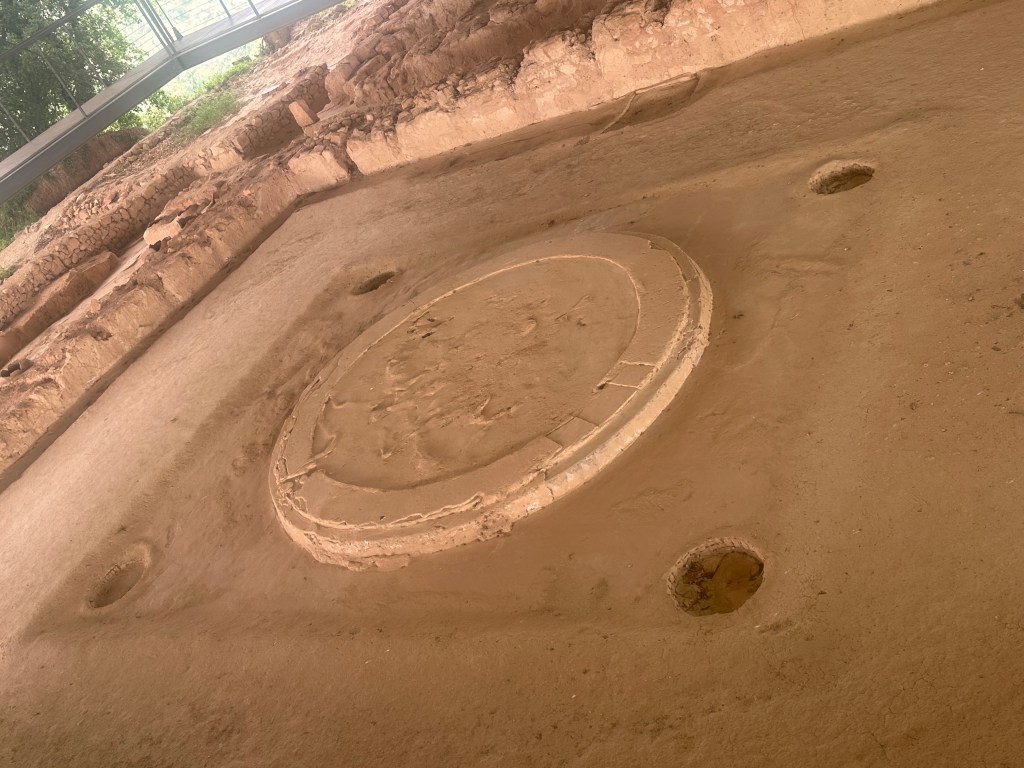
This palace stood out from the other Mycenaean palaces we have visited because it lacks the cyclopean masonry and fortifications that we saw at Tiryns and Mycenae. The palace was described by Homer and attributed to Nestor, the purported king of Pylos who was said to be old and wise and to have participated in the Trojan war. We observed the ruins of the palace from a catwalk where we were able to see the remains of king’s megaron, where the Wanax (a Bronze Age king) would have sat on his throne and entertained guests. The megaron contained a monumental hearth large enough to roast an entire bull as well as a libation channel next to the throne area where the king would have been able to pour out libations to the gods. Frescoes exist that depict the feasting that would have gone on in this room, limited to an exclusive entourage of guests who would have been indebted to the king for accepting this privilege. Feasting would also have occurred in another part of the palace for those of a lower social rank and evidence of this includes the large collection of kylikes (drinking vessels) found there. We also saw a smaller area with a hearth and a bathtub known as the Queen’s megaron, which would not have been used by a Queen but possibly by an administrator.
This palace at Pylos is especially important because it contained the largest corpus of linear B tablets ever found. Linear B is a syllabic script used for administrative purposes that was deciphered by the architect Michael Ventris in 1952. From these records we can better understand the political, social, economic, and religious structure of the Mycenean palaces. There was an economic system based on taxes, reciprocity, and redistribution of commodities including cereals, oil, wine, honey, and figs. A market economy and wealth financing also existed as demonstrated by data recovered from these tablets. The palace was also a center for industries including perfume and textile manufacture.
Our day of visiting temples, tombs, and a monumental palace wrapped up when we got back on the bus and headed to our hotel where we promptly checked in and proceeded to explore the town of Pylos and get some much needed rest. Tomorrow our adventure of learning and discovery will carry on after having today gained an even better understanding of the ancient Greek world!

 Concordia CMLL Study Tour
Leave a reply to Scott Hibberson Cancel reply