
By Corin Laberge
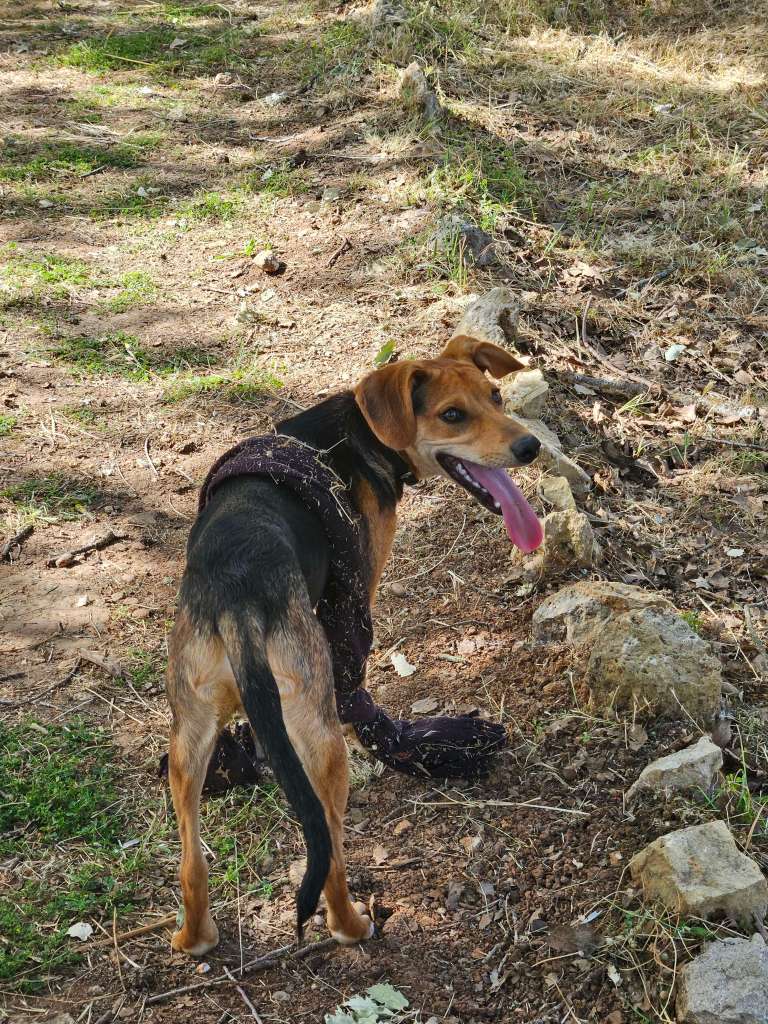
The day began as most have so far with perfect weather and a hearty breakfast, before we clambered onto the bus to continue our exploration of western Crete. Our first stop was the Minoan cemetery of Armeni, where we discovered an incredible number of Late Bronze Age chamber tombs, as well as an intriguing Mycenaean style tholos tomb. We were then let loose upon the hills to stick our heads into as many of the impressive limestone chambers as we pleased, accompanied by our new floppy-eared classmate.
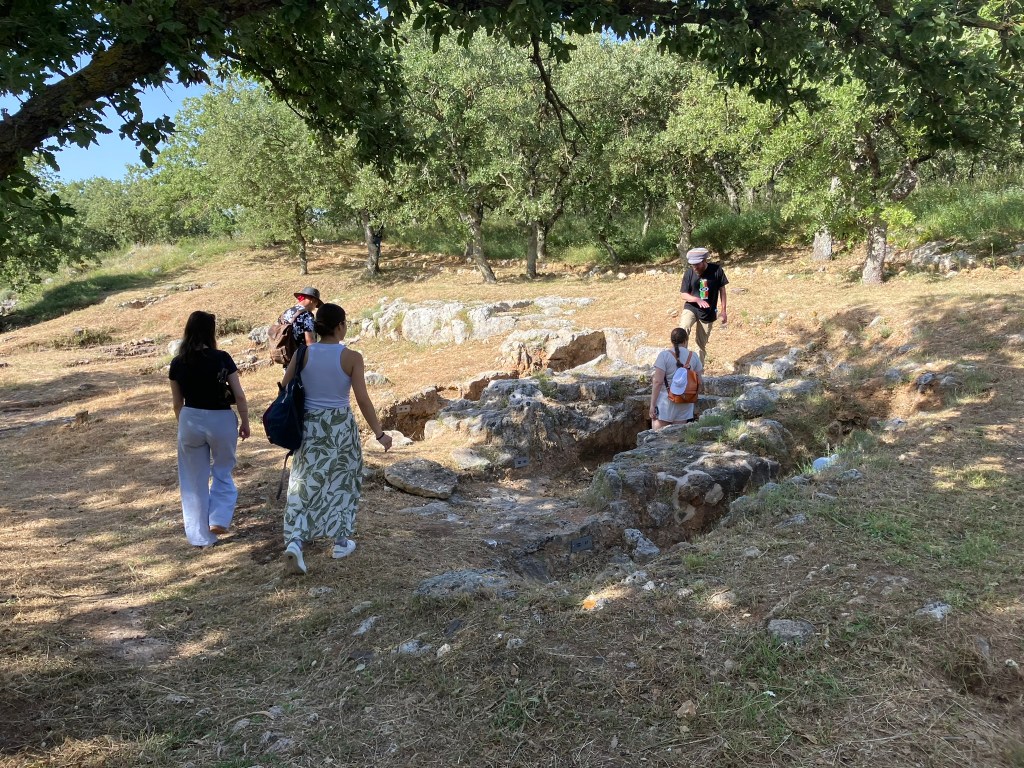
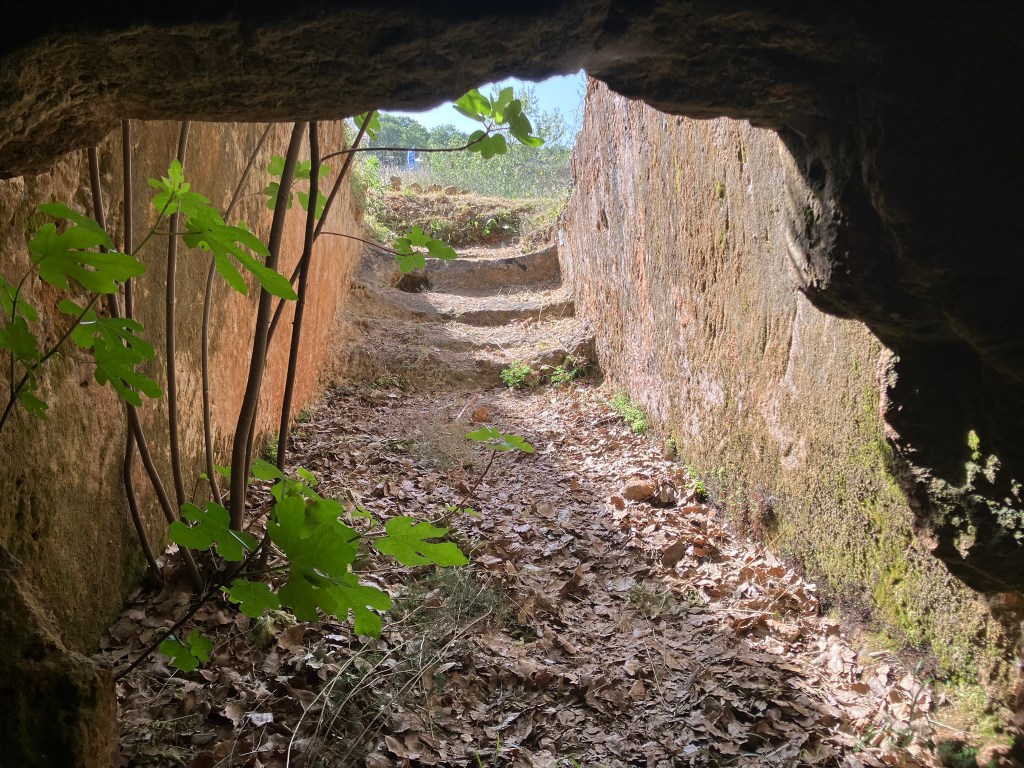
The tombs ranged greatly in size, shape, and extravagance, with some too claustrophobic for my comfort and others monumental in both their interiors and their stepped dromoi. As the designated creepy crawly enthusiast of the trip, I feel the need to mention a couple encounters with the resident fauna, that being snakes, lizards, centipedes, violet carpenter bees, and some gloriously massive cellar slugs.
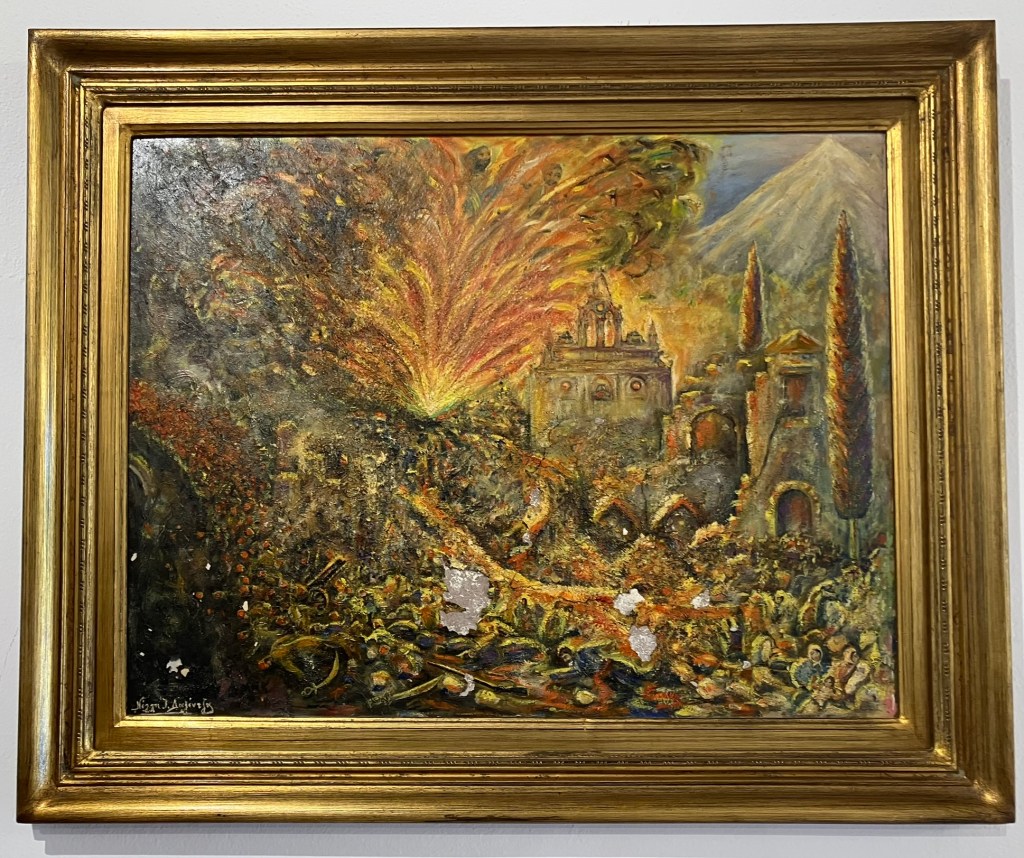
In the early afternoon, we visited the Arkadi Monastery, a gorgeous Byzantine religious complex which was besieged by Turkish soldiers during the 1866 Cretan Revolt. Before entering, we heard our last site presentation of the trip, during which Julia spoke about the struggles of the Cretans for their independence from the Ottoman Empire and informed us of the moving events that took place on the site. Rather than surrender to their oppressors, the rebels, monks, and hundreds of women and children that were hiding in the cellar during the siege ignited the gunpowder stores and martyred themselves for the cause of their freedom. This knowledge weighs upon all of us, as we take in beauty of the Renaissance style architecture.


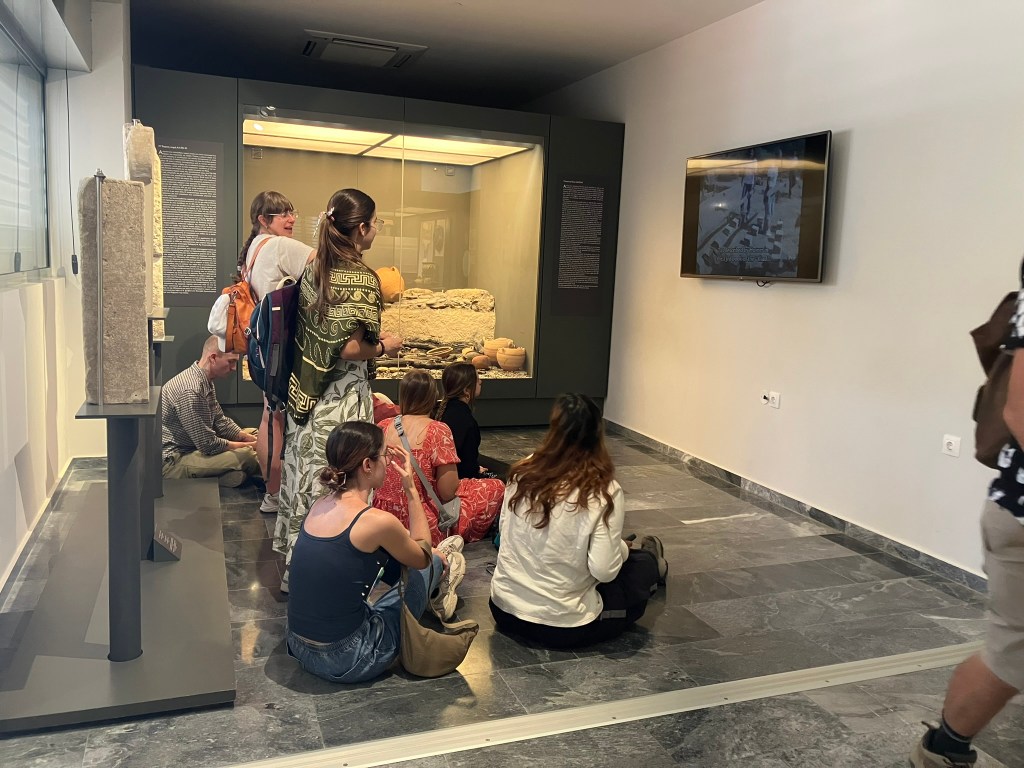
Later, we make our way to the archeological museum of Eleutherna, to see what was recovered from the various Archaic, Hellenistic, Roman and Byzantine sites of the area. Amongst the various artifacts and gaggles of school kids, we gather around to watch the informational videos. They are evidently well-meaning, and offer a creative way of presenting information, though come across a little silly in practice.
Finally, our eventful day ends with a stroll through the pottery village, Margaritas. Here, we are greeted with ceramics of every style and colour, set out in front of the shops that line the main street. Though by now we are too starved to put off lunch any longer, I still have time to pick up a small espresso mug for my mother. Hopefully she’ll forgive me for missing Mother’s Day.

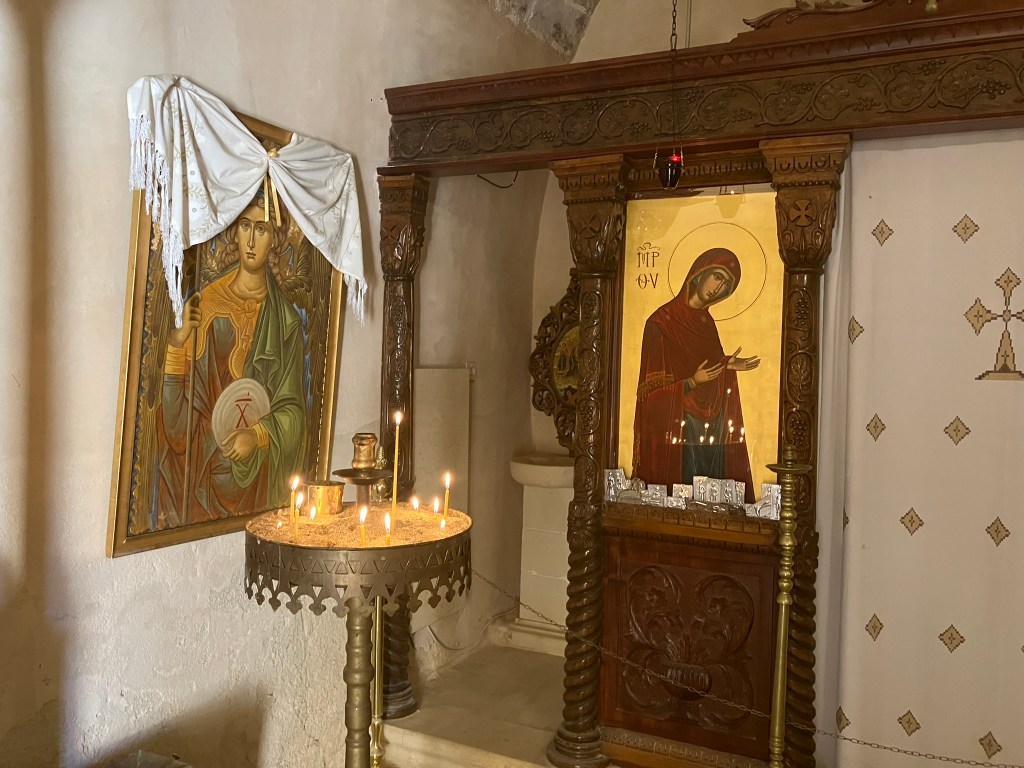
As archeologists, we spend much of our time treading through what might be not much more that foundations, trying to conjure up an image of what might have gone on there. The Arkadi monastery is one of those places that makes that mental image really easy. There, the past is heavy in the air, impossible to ignore, while you stand in the exact spot where hundreds of people lost their lives hundreds of years ago. As a light a candle for my grandfather in the chapel of Saint Arkadius, I can’t help but think of all the ways we memorialize what we’ve lost. Outside the gunpowder storeroom, some of my classmates discuss the illustrated display of the fateful event set up in memory of the victims. Upstairs in the art gallery, I’m struck by a painting of the monastery lit up like a firework, created by a local artist from Rethymnon.
Death is something so personal yet so universal, I’m inclined to believe that our reactions to it are what make us human. Just this morning, Arlene and I wondered if Minoan children came to the Armeni Cemetery to tell ghost stories, as kids would today. We know at least that the families of the deceased returned to leave offerings in the niches carved into the side of the dromoi of the tombs. I like the idea that, had a been born a couple millennia before the construction of the first ever church, I still would have wanted to light a candle for my grandfather, or at least something of the sort.
 Concordia CMLL Study Tour
Leave a comment