
By Kayla Mardas
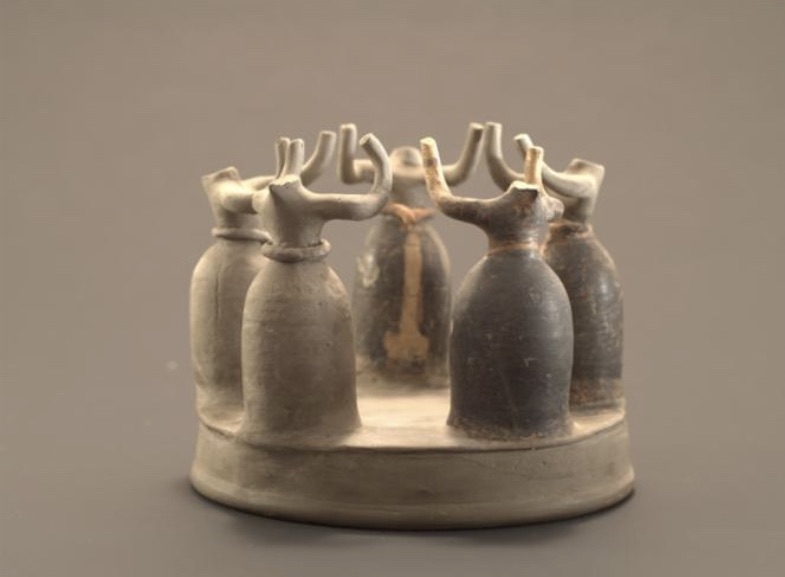
Clay model of women in a ritual dance from Hagia Triada, Protopalatial period (Archaeological Museum of the Messara)
We started the day unfortunately learning that the Minoan Villa in Vathypetro was closed and had to return back on the bus for our next destination. We then made our way to Agioi Deka: Archaeological Museum of the Messara. This is in the village of Agioi Deka in southern Crete and although smaller than other museums we have visited so far, this held many artifacts from Minoan, Roman and the Byzantine times. We observed the objects which have been found in sites such as Hagia Triada, Phaistos, and Gortyna. After the museum, we walked along the boardwalk in Matala where we got to pass by beautiful pieces of pottery in some shops. Professor Francis informed us about the ancient Roman tombs found all along the cliffs and mountains. Hippies back in the day would turn these ancient tombs into their homes where they were able to create music, art, celebrate, and live freely by these stunning views. Now, it is no longer the case because they have become protected and are ancient sites we can visit today. We also got to visit some fishtanks near the end of the boardwalk which the Romans would use to keep their seafood as fresh as possible, it was interesting to see how they would preserve their food!
Something that struck me at the Archeological Museum of the Messara was a small model in the first room of the museum. This is a clay model of women in a ritual dance all doing the same poses from Hagia Triada, which is a site in the south of Crete, near that of Phaistos. It was states this was in the Protopalatial period. Here, we see a circle formed by eight women having all their arms raised as they appear to be excited or praising something that at first remains mysterious.
In the Protopalatial period, Minoan religion and art artifacts were at their peak. We know these are women because of their long and fluffy skirts. The object captivated me because they don’t have faces but yet I can imagine the expressions they must be sharing. It is believed that these women are participating in a ritual dance in celebration of a goddess. Minoans praised women and there were some priestesses, dancers, and other important figures since they were a religious society and would celebrate females. Some may assume these women are also taking part of a reenactment, perhaps recreating something that has been seen in a theatre. I would believe this object was a votive gift to a goddess and directly thanking women for fertility, or even protection. I have observed Minoan art as some have been made circular for example the Phaistos Disk, and this can be more symbolic as a possible votive or offering to a god/goddess. Although we have no written descriptions and analyzed captions about this object, it leaves space for the imagination about women participating in rituals and the meaning behind all the positive energy they are sharing with each other.
 Concordia CMLL Study Tour
Leave a comment