
By Julia Carusella
Today we visited Ancient Messene and Olympia’s archaeological site and museum. Ancient Messene is one of the best preserved archaeological sites in Greece featuring several parts like the Arsinoe Fountain House, Sanctuary of Isis and Serapis, Treasury house, Temple of Messene, Agora, Sanctuary of Asclepius, Artemision, Funeral Monument, and Hierothysion. The large theatre (see image below) is the most well-preserved theatre that can seat thousands of people with the purpose of hosting political assemblies. Theatres in ancient Greece are very impressive for their size and ability to project sound. Another very interesting part of this site was the sanctuary of Isis and Sarapis. The cult of Isis and Sarapis moved to Messene from Alexandria through commercial channels during the 2nd century BC. It is intriguing to see how Greek and Egyptian religious traditions blended during the period we are studying. What I would like to know more about is the mausoleum that was also found on this site, located in the Agora. It is uncertain who this mausoleum was for but likely for the Saithidian family. It encompasses a Doric style and it is believed that the family members were high Priests and Helladarchs of the province of Achaia.
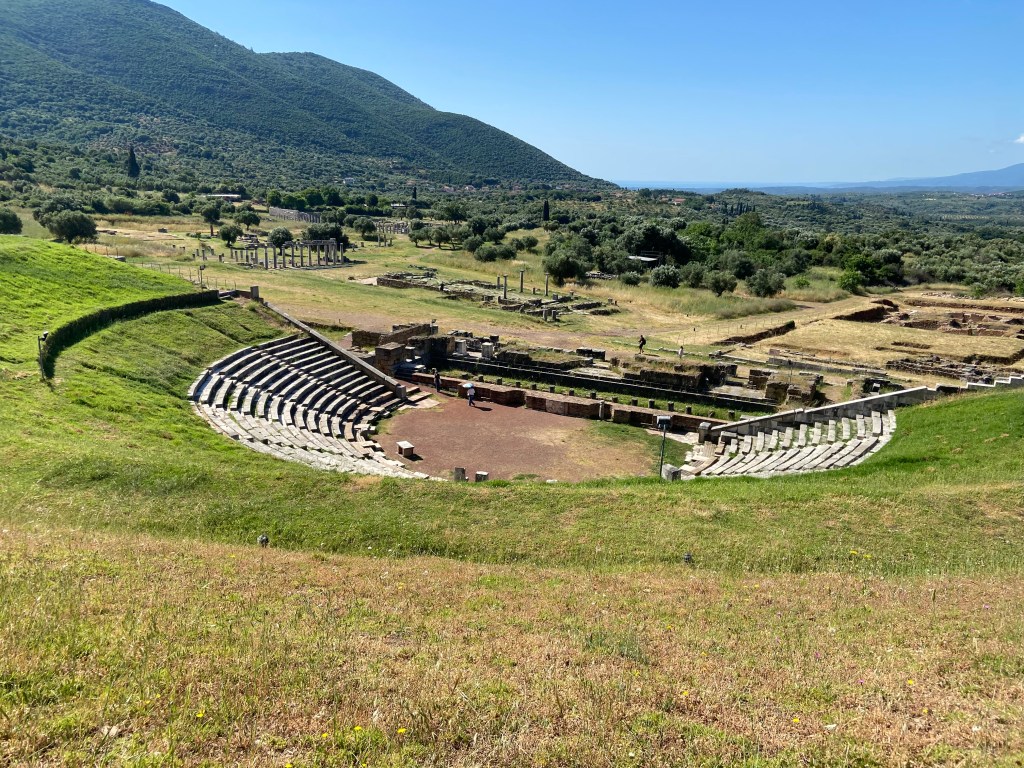
Large theater at Messene
Following our visit to Ancient Messene was the visit to the Olympic archaeological site guided by a special guest. This was one of the most iconic and well preserved places of the ancient world. Olympia was the location of the Temple of Zeus (see image below), featuring one of the worlds seven wonders of the ancient world, a statue of Zeus made of ivory and gold. In addition, Olympia’s archaeological site is a huge complex that has a gymnasium, palestra, stadium, hotel, and baths. We made our way to the impressive stadium where we had the opportunity to run from one end to the other. This was the place where the competitors would perform their athletic demonstrations. The men who participated in the event would train beforehand at the gymnasium. It is also relevant to note that they competed nude and women were forbidden from watching, risking death as a punishment if they broke this rule. The stadium was not just a sports venue but a also religious festival to honor Zeus.

Temple of Zeus at Olympia
After visiting the site, we made our way to the museum, which turned out to be just as fascinating. There were many striking things. However, the most notable for me was the presence of the rooster, in two different areas. The first that caught my eye was a terracotta rooster figurine (see below). The myth that relates to this figurine goes as follows: a soldier assigned to the god Ares was turned into a rooster after an incident involving him sleeping through the war after drinking all night occurred.

Bronze rooster (Archaeological Museum of Olympia)
The second time I saw the presence of a rooster was in the arms of Zeus holding a boy and a rooster (see below). The rooster was a symbol of love between the man and the boy. Seeing the rooster in two different contexts demonstrates that different types of meaning can be assigned to the same animal.
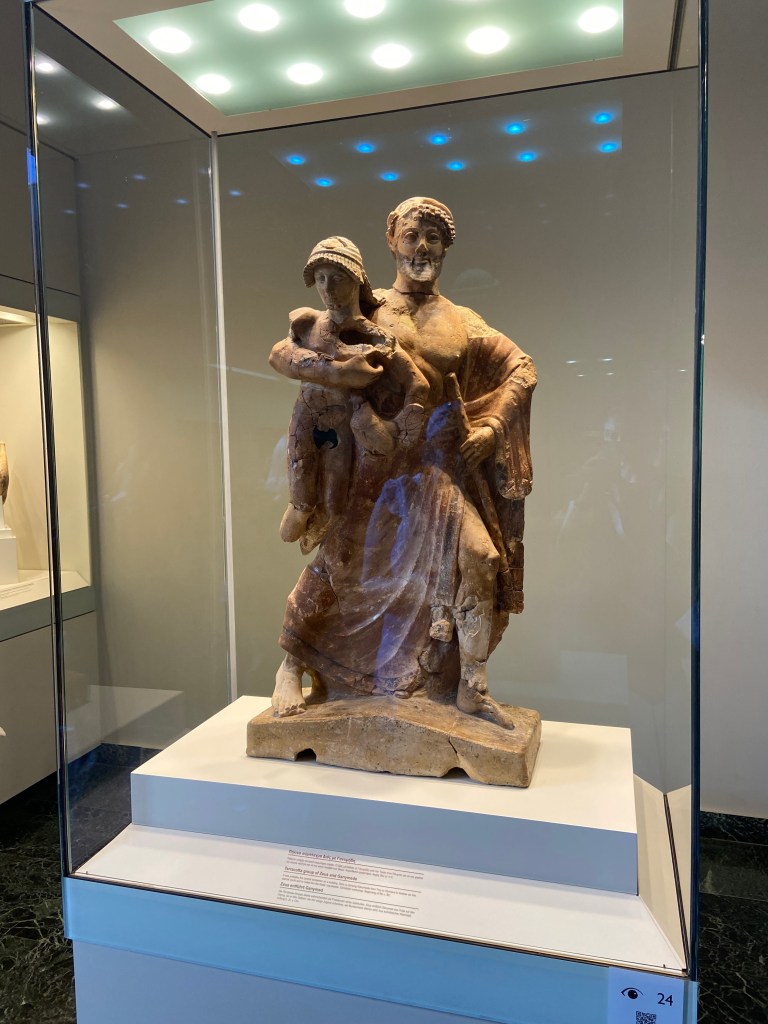
Zeus holding a child and rooster (Archaeological Museum of Olympia)
The visits to these two sites offered an interesting glimpse into the Ancient Greek past where we saw politics, games, and symbolic animals. These features were not only archeological findings but revealed identity, beliefs, and community.
 Concordia CMLL Study Tour
Leave a comment