
By Isabelle Seguin
We began our day by travelling to Corinth, where Juliana gave a wonderful presentation on the Temple of Apollo. We also visited the Archaeological Museum of Ancient Corinth, which exhibits artifacts found within and around the site. We then toured the Markellos Mill to taste and learn about how their factory produces high-quality extra virgin olive oil. After leaving Corinth, we took the bus to Nemea to visit the Panhellenic sanctuary of Zeus and visit the Archaeological Museum at the site. We rounded off our day by visiting the Palivos Estate Winery for a delicious wine tasting accompanied by the winery supervisor, Stella.

I was surprised at how emotionally overwhelmed I became when viewing the skeletal remains of humans on display in the museums at Corinth and Nemea. Knowing these people were removed from their final resting place and exhibited behind a glass case was quite conflicting. On one hand, they can provide crucial information to further understand the culture, habits, and evolution of burial techniques and traditions in the ancient world. On the other hand, these were human beings who were taken from their graves and reduced to objects. While I can understand both sides of the debate, I cannot shake the feeling that I am doing something morally wrong when taking photos of these people’s remains. They lived, had people who cared about them, loved them, and buried them, believing they would be able to rest there undisturbed and at peace for eternity.
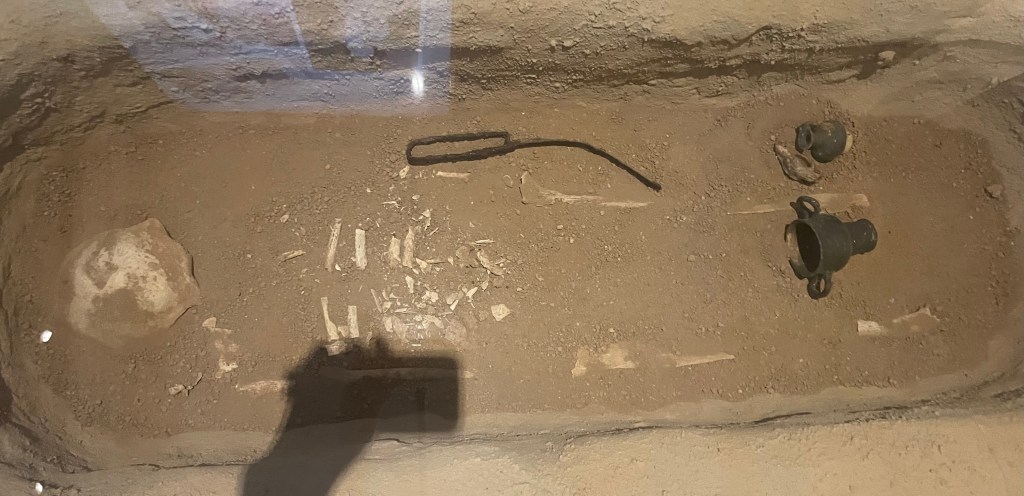
It felt particularly stomach-churning seeing the remains of a child likely no older than 10 years old in the Corinth museum. Why should they be disturbed for our education? Who gave us the right to rip them from the earth, strip them of their possessions, and put them in a museum, or worse, in the back of an archive room collecting dust? Just because they lived thousands of years ago, are they not deserving of the same respect we give our deceased in the modern day? I know it may seem cliche to ask, but where do we draw the line? Is it when they’ve died a certain number of years ago, when their names are lost to time, or when they have no living family members left to remember them? When discussing this topic with others on the trip, I’ve learned that my feelings are not universal, and since they are dead, I cannot speak for those whose bodies are on display.
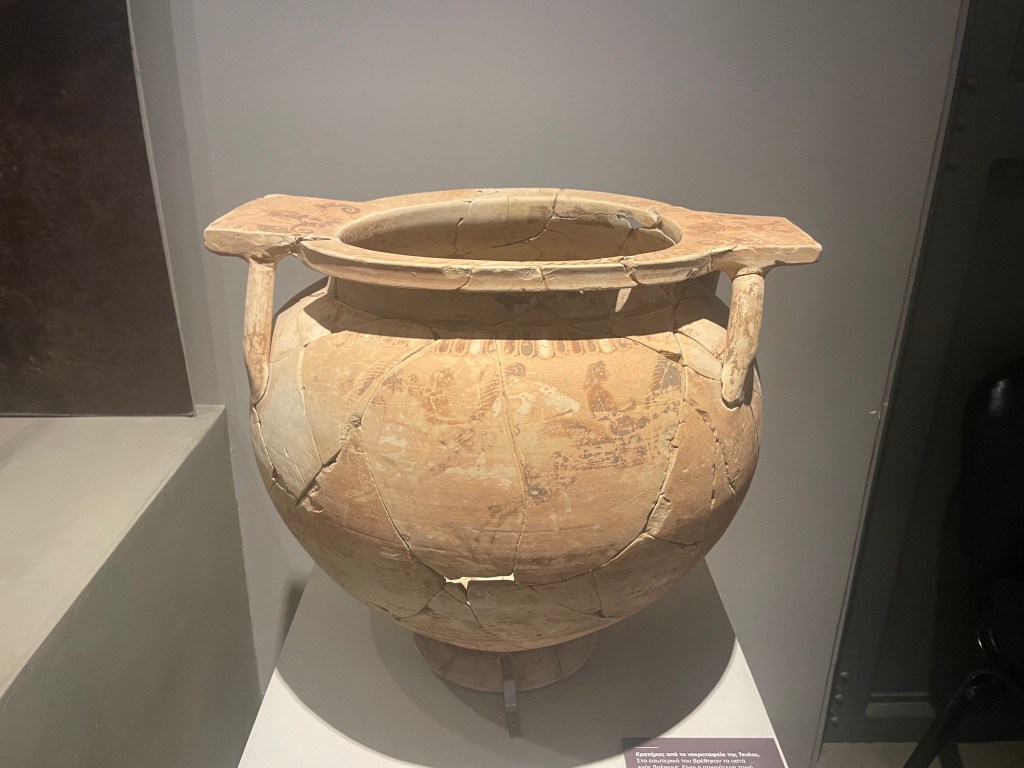
I again feel quite conflicted, as there is so much valuable information we can gain from unearthing and examining these sites, however, I am unsure if it is worth taking an infant from their grave so we can put their burial pot in a display.
Today was a challenging but engaging experience. The ethical debates concerning the archaeological excavations of human remains will likely be a topic that I will continue to have mixed feelings about. I am interested to see how others and myself will grapple with the possible human remains we will see on display at future sites on our trip.
 Concordia CMLL Study Tour
Leave a comment