
By Catherine Salkeld

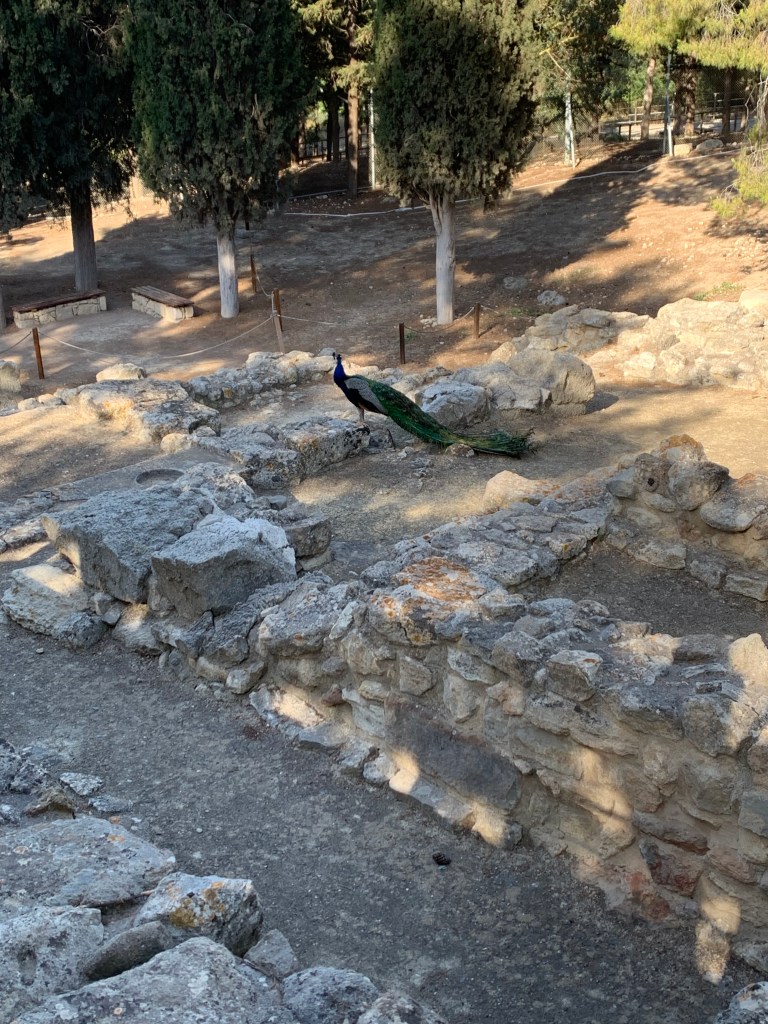
The morning started even earlier than usual, as with a knock on the door of our cabin before the sun rose, we were disembarking from the ferry and taking our first steps onto Crete. Our first stop for our day was the Minoan palace of Knossos where we were greeted by our guide for the site, Dr. Don Evely. His incredibly informative lectures were occasionally punctuated by the mocking cries of the peacocks, first introduced by Arthur Evans, that continue to populate the site to this day. One of the first things he told us was how little we really know about the Minoans, specifically how little information there is about the first two palatial phases of Knossos, spanning from 2100-1470 BCE, as there are no surviving Linear A or B texts from this period. Another aspect we were reminded about is that we know nothing about was the character of Minoan society. According to Dr. Evely, any attempt to characterize the Minoans is largely the result of projection by those doing so. It is no coincidence that the peaceful, nature-loving conception of the Minoans that is so widespread that even I have fallen prey to it was first propagated during the flower-power ’60s.
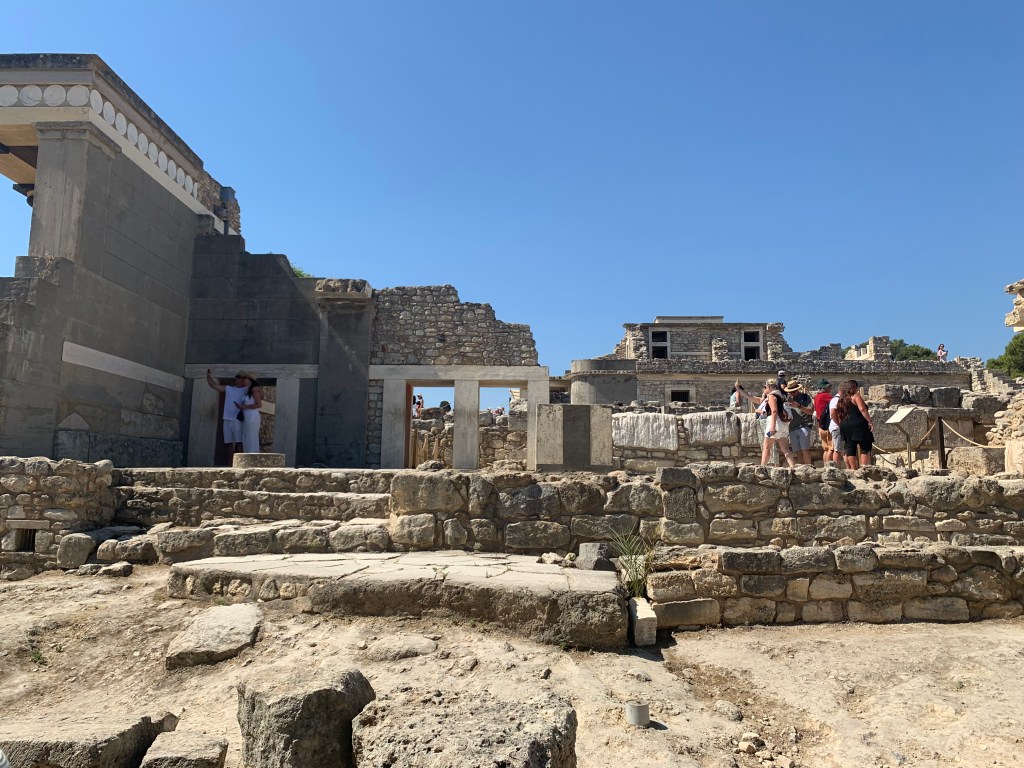
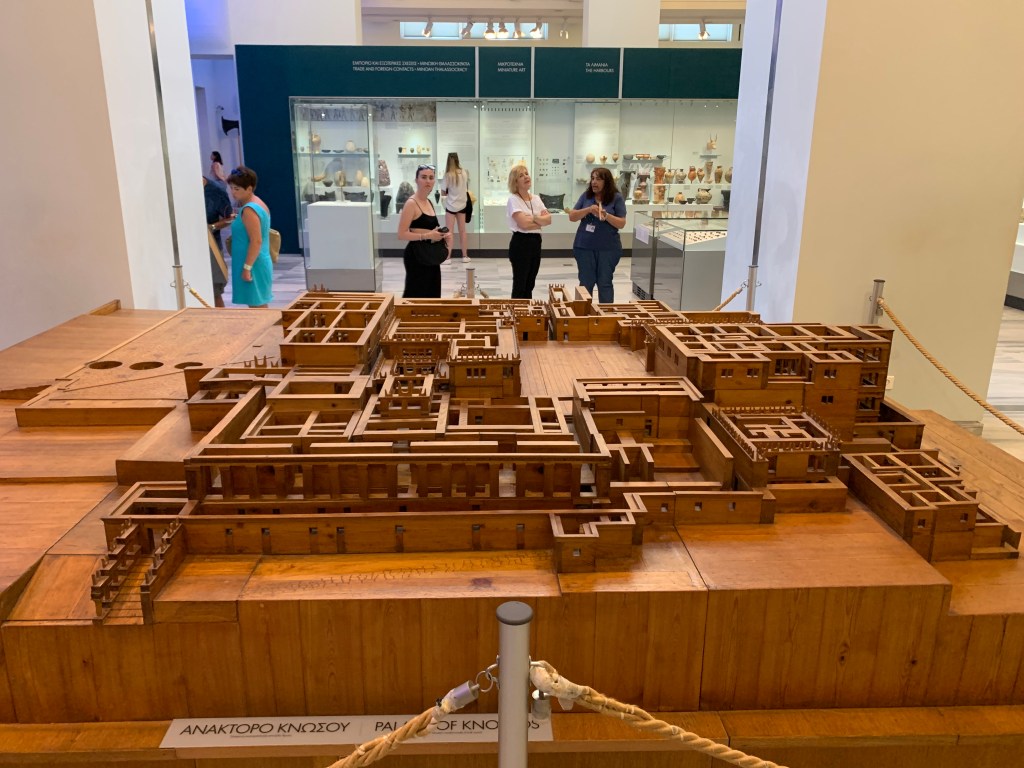
Dr. Evely seemed to be on a spree to deconstruct every preconceived notion I held regarding Knossos, as his take on Evans’ restorations was incredibly surprising to me. Though it may seem that the restorations were simply the result of a Victorian British man’s ego (as seen with the peacocks), the restorations first started as Evans righting a mistake of leaving a portion of the site exposed to the elements too long. He began covering up the site afterwards, and figured that the best way to do so was to reproduce what would have been there originally. This trend continued as after a room collapsed following the removal of the degraded mudbricks protecting it, Evans recreated the room as it had been previously. He also knew that the site of Knossos would garner public attention and saw the restorations as a way to teach visitors about the Minoan architecture style in context. Though I may not agree that Evans’ restorations were the best way to preserve the site, I can at least acknowledge that his doing so out of his own pocket was motivated by good intentions rather than a Victorian archaeologist’s flight of fancy.
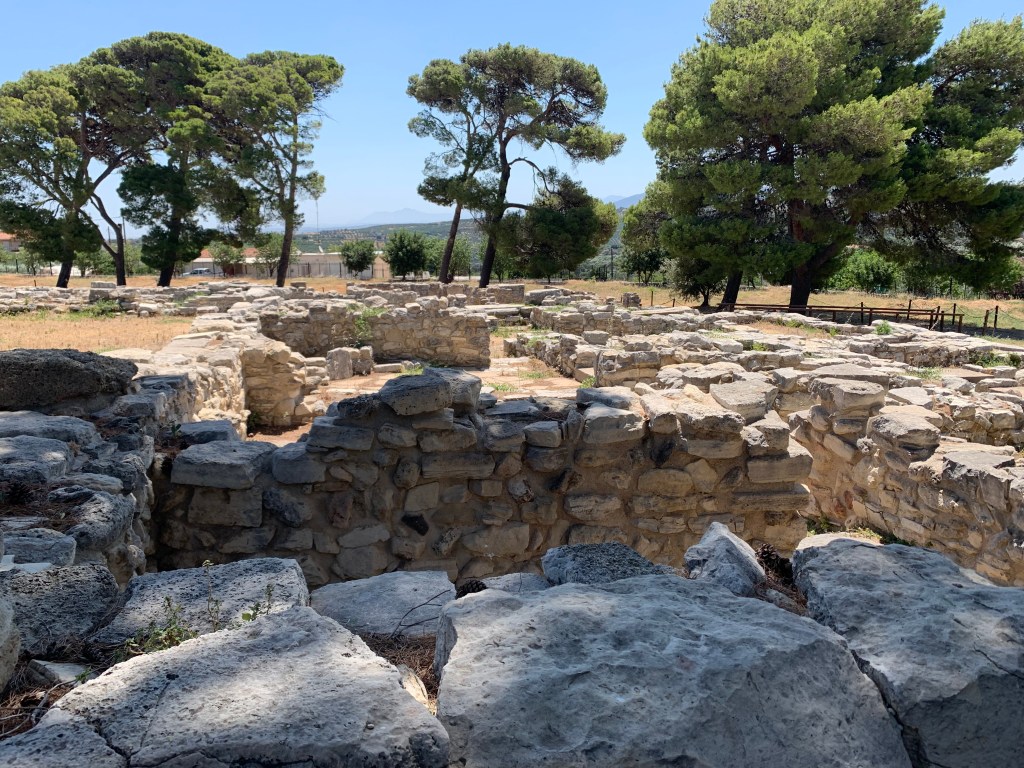
The theme of not knowing followed us everywhere we went today it seems. The next site we visited was Tylissos, of which few findings have been published, leaving us to draw our own conclusions from the site. The site was a series of houses, each with aspects usually seen in Minoan palaces, leading us to believe that they were under the control of Knossos and were used for administrative purposes. Another interesting aspect of the site was the superposition of a later, Late Bronze Age building on top of the Neopalatial remains, though the Late Bronze Age construction remains somewhat of a mystery as it was removed by the archeologists excavating the site.
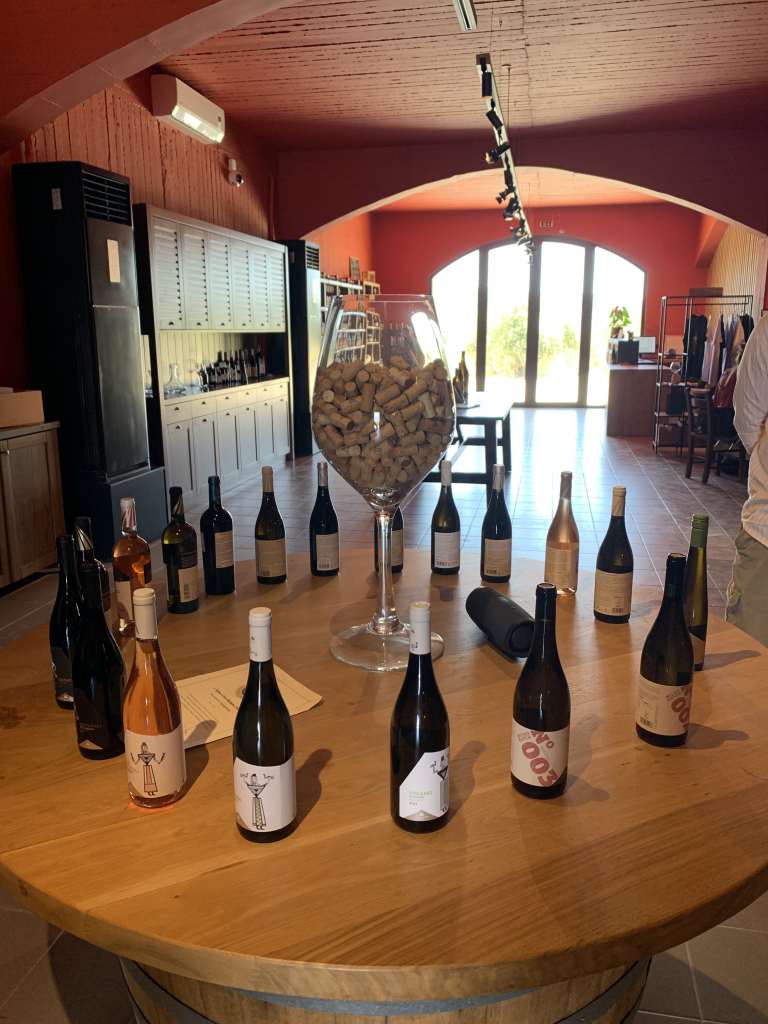
Continuing on to the wine tasting, I did not have to remind myself that I knew nothing, as I am painfully aware of my lack of knowledge when it comes to wine. However, in between bouts of pretending I know what a floral bouquet in wine tastes like, it was interesting to see the similarities between this vineyard and the last one we visited. Both were family-owned and grew mostly local varieties of grapes, and both owners seemed very proud of this fact. Maybe one day my wine ignorance will be cured, but not today.
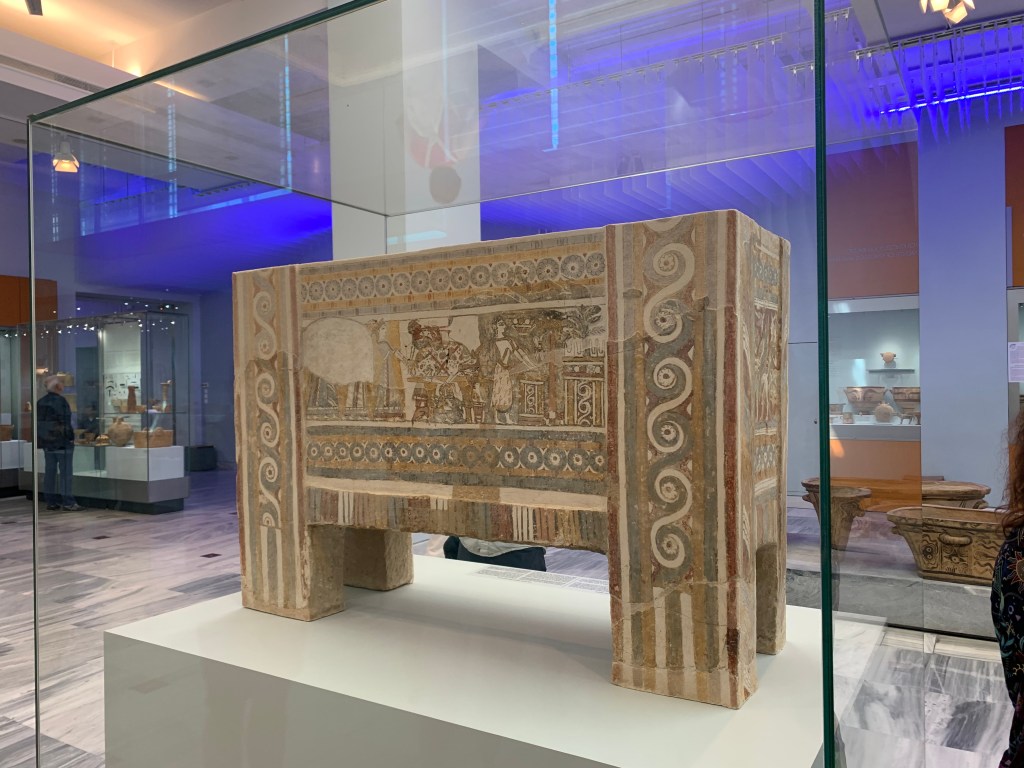
We ended the day at the Heraklion Museum of Archeology with Penelope’s excellent presentation on the Aghia Triada Sarcophagus. While the presentation was extremely well-researched and informative, the conclusion to be drawn about whether a funerary procession or a depiction of a Cretan god is being depicted on the decorations of the Sarcophagus is that with the information we have, there is simply no way to know. In archaeology, it is important to know the things we can, and accept the things we cannot.
 Concordia CMLL Study Tour
Leave a comment