
By Jayde Clément
As we entered the church of the Monastery of Hosios Loukas, the building foreshadows what we will witness inside as the art depicted within the arch of the entrance introduces the religious concept of this building. Religious art is evident in its style and I honestly believe that was intentional. As I’ve entered many churches and monasteries in the past, whether they were active or abandoned, the style is always the same. The walls and the ceilings contain this angelic sort of art, with the halos surrounding the heads of certain important people as well as the angular faces portrayed as seen in the photo below. The surrounding figures as well as Jesus himself have these halos representing their significance in the story being portrayed. These figures could possibly be priests, Jesus’ apostles or any one with large importance while the others who do not have halos could be religious followers with little value. This place brought a sense of nostalgia as I used to practice Christianity as a child and I was surrounded by these sorts of paintings. Not only that, but I was also surrounded by many religious objects that we saw today, such as the tabernacle. The scenes that we saw today were more detailed in certain contexts. For example, Aphrodite mentioned in her amazing presentation about the representation of the Universe of God as well as the Cosmos. That was the first time I saw that sort of scene depicted and it was interesting. Nonetheless, these paintings are visual representations of valuable scenes in the Bible. The one that is most popular to anyone who has brushed upon Christianity and is captured in another photo below is the scene of the Crucifixion of Jesus Christ. The slim bodies, angular faces and the halos are visible to the criteria of this artistic quality. There is someone who is behind Jesus who does not have a halo surrounding his head, indicating that he is of little importance towards Jesus as he helps him to the cross, which eventually leads to him being nailed on the cross. I cannot help but compare this art to the New Fort in Pylos. I explored that fort during my free time with Gabriel, Charles, Athena and Pénélope. We visited many buildings throughout the fort but what I am referring to specifically was in the restored church of the Transfiguration of Christ the Saviour. There was a modern take to these paintings as I believe they were repainted more recently than that of the monastery as restorations of the mosaics were during the year 1820. Nonetheless, the angelic features are still there, with the slim faces, the same style in depiction of drapery and the halos around the heads. The title of this blog post says “intense” because this monastery was well kept as it is still used today while the Byzantine site in Mystra was not. Therefore, there was a lot more to see and I honestly believe there was this sort of heaviness when entering the church, with the prying eyes of the people in the paintings watching you. Additionally, the scenes depicted are not something that a viewer is supposed to enjoy as they express the major aspects of Christian history, and it is not a happy one.
Moving forward with the day, we were able to see the historical landmark of the Lion, a monument that was erected because of the Battle of Chaeronea, which was between Thebes and Athen. This was erected to commemorate the 300 soldiers that were part of a sacred Theban band of hoplites. This lion was positioned where 250 theban warriors were found with the majority of them containing blunt force trauma to the heads. Even if we saw the museum, the lion was my favourite part of Chaeronea.
Continuing with the theme of battle, we went to Marathon to visit the Marathon Tumulus resulting from the Battle of Marathon. There, Kim gave an insightful presentation on the Tumulus, giving us information about Marathon itself and the actual Tumulus. It was rather unfortunate that the Tumulus was not accessible but it was still nonetheless impressive to learn about its history and who is buried there. When we reached the Museum of Marathon, Professor Buell mentioned that there was a marker for the turning point in the Battle of Marathon within the fenced area. Charles and I ventured out to find that marker but we were not lucky. We asked Professor Buell afterwards and it turns out the marker was outside of the fence. Be that as it may, venturing out to see the tumulus that was out there for the Plataeans was still an interesting site to see. As well as going into the museum and seeing all the artefacts, especially the Egyptian section.
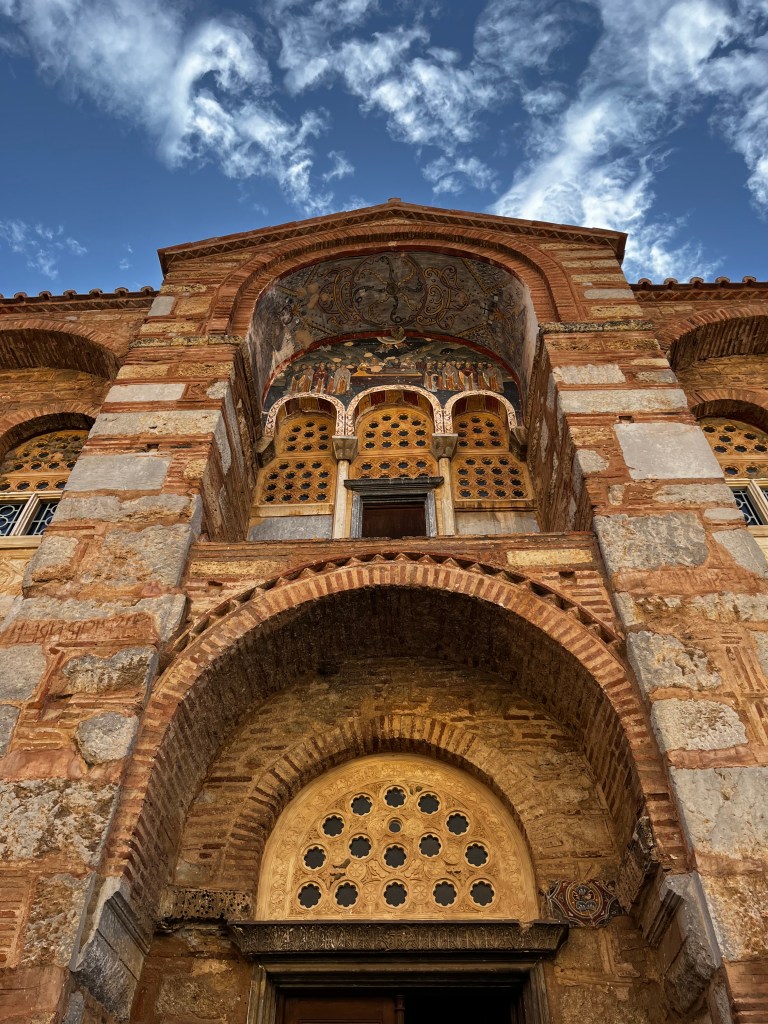
~Entrance to the Monastery’s Church, Hosios Loukos.
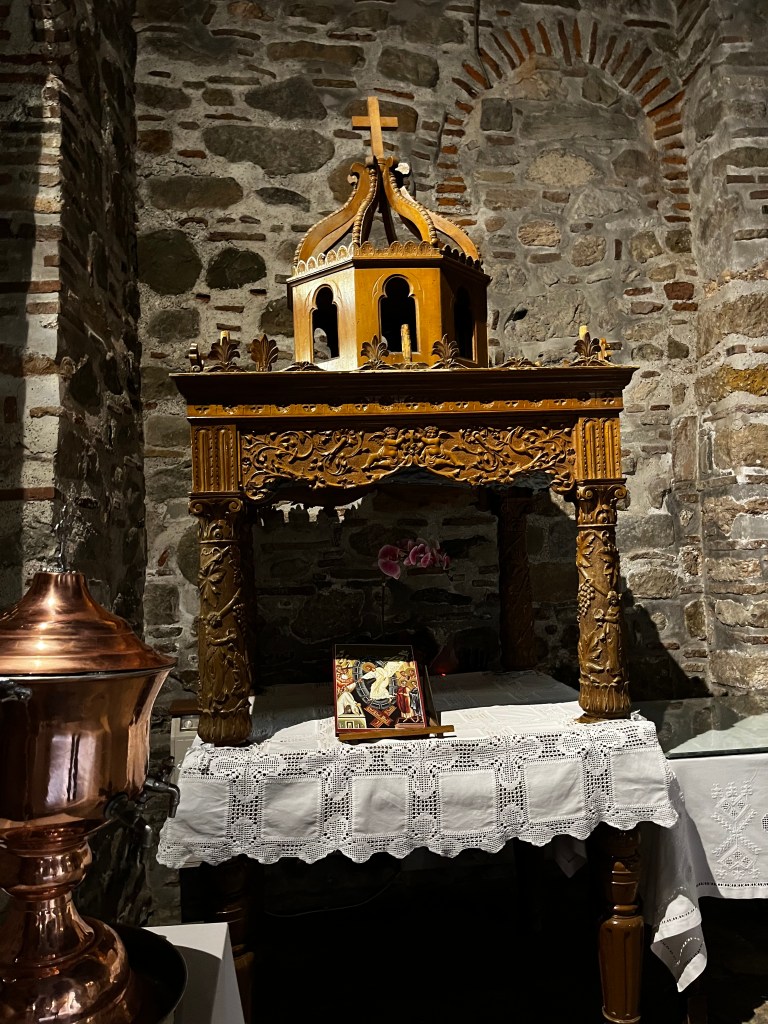
~The Tabernacle, Hosios Loukos.
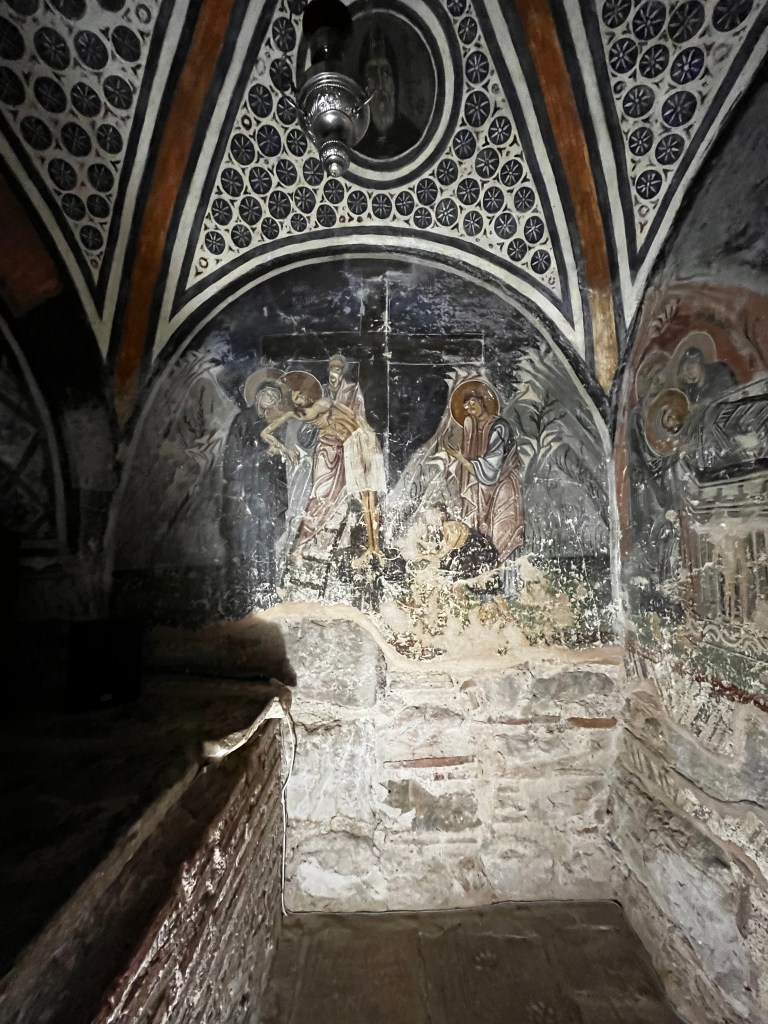
~Jesus and the Crucifixion, Hosios Loukos.

~Transfiguration of Christ the Saviour, New Fort in Pylos.
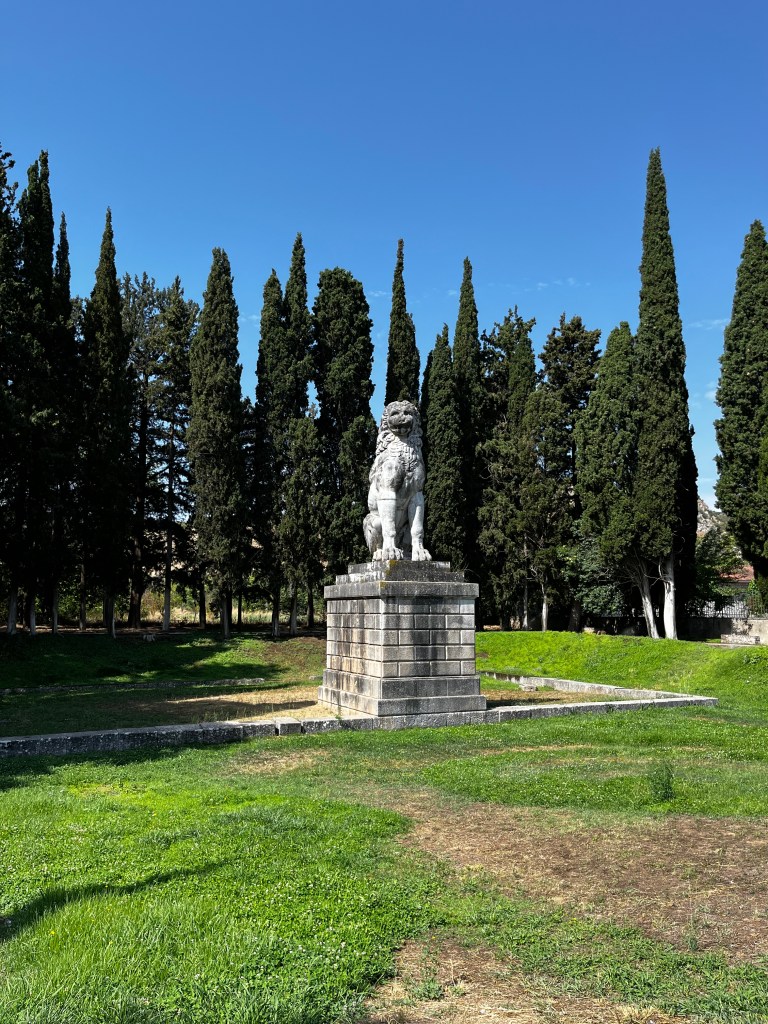
~The Lion, Chaeronea.

~The tumulus of the Plataeans, Marathon.
 Concordia CMLL Study Tour
Leave a comment