
By Nava Camlot
The day began at the Archeological Museum of Nafplion, a minutes’ walk from our accommodation. On the walk to the museum I observed the shiny marble stone lining the narrow roads of the Venetian influenced town. The museum had a display of the Franchthi cave, a 20 000 year old site excavated in the 1960s and 70s by archaeologists that have remained prominent today. The site showed how groups transitioned from seasonal hunter gatherers in the Mesolithic period to a farming society where individuals would live inside and outside caves in the Neolithic period. The museum also houses a full set of Bronze Age armour found in a Mycenaean chamber tomb, or what Professor Buell described as a “budget tholos”. The armour is 95% copper and 5%, tin held together by leather straps and weighing a total of around 24kg in its prime. A helmet lined with boars tusk finished the ensemble. The question arose about the practicality of the armour considering its heaviness and whether it was used in battle or simply had a symbolic purpose. Aphrodite brought up a recently published paper in which an experimental archeological test was conducted to answer this question. Archaeologists enlisted Greek marines to replicate Homeric battles and they realized that the armour is effective, despite its weight.
On our way to Tegea, an important ancient Arcadian city, our driver Yannis, brought us through winding roads and I observed the mountainous landscape through the bus window. The heat accompanied by the dry vegetation of the land had me reflecting on the symbolism and value placed on water in Ancient Greece as a life source.
In Tegea, Vanessa did a great presentation on the temple of Athena Aleia. She informed us that the temple served as a place of refuge for individuals escaping war or crime. The temple was built using columns from three different orders. Doric columns line the outside colonnade while ionic columns engaged along the inside wall are topped by Corinthian capitals. Although the temple site was not preserved as well as other temples we have seen, as the rocks were worn, columns fallen, and snake holes lined the dusty ground, using a site map we attempted to reconstruct the site in our minds.
My favourite site of the day was the last. We visited the Byzantine city of Mystras. Mystras was a powerful center of art and culture and was referred to as “Sparta 2.0” by Victoria in her excellent presentation. Byzantine churches line the side of a tall mountain all surrounding a fortified castle. Well preserved frescos depicting religious scenes were found within the many churches. We spent around two hours exploring the site, inspecting every crevice and occasionally “off roading” to find magnificent views or hidden surprises. The churches were extremely well preserved considering most of them were constructed in 13th century BC. Under the church of Saint Nikolaos we found a pile of bones, at first I thought they were human remains and might be those of a buried priest, but to my disappointment Dr. Buell informed me that they were animal bones (specifically those of goats/sheep). Walking down the hill, swatting multicoloured bugs, listening for crickets in the dried grass, and saying hello to the cats living on the site, the group relished in the beauty of the site and the shade provided by the mountainous landscape.
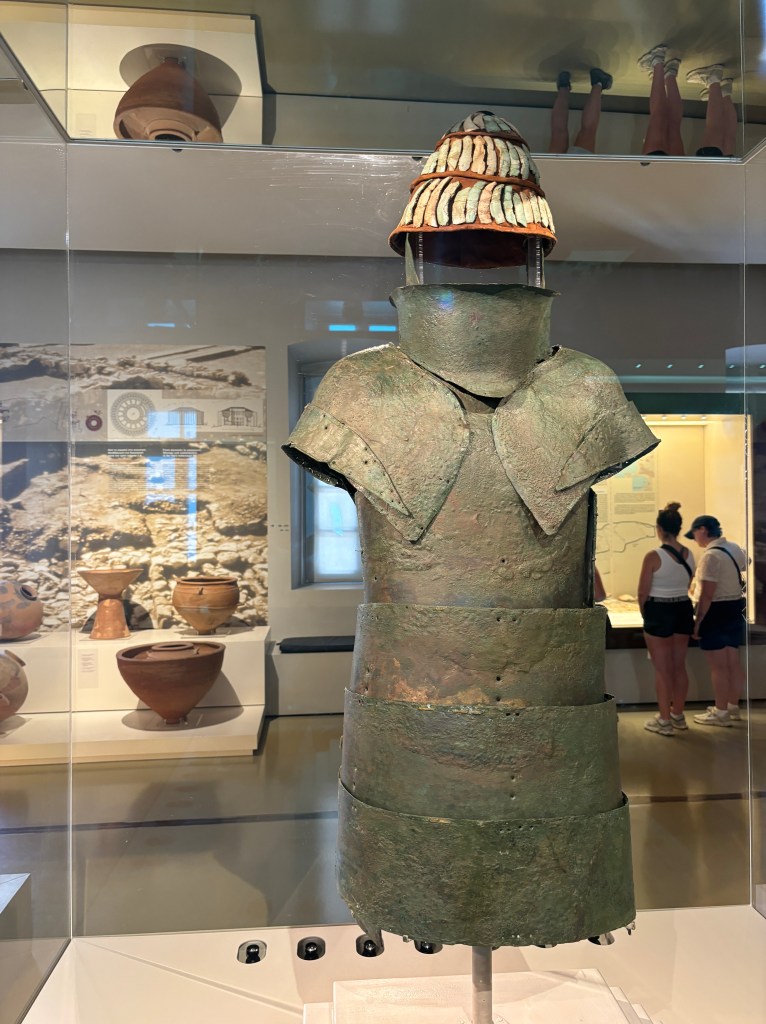
~Bronze Age Armour at the Nafplion Archaeological Museum.
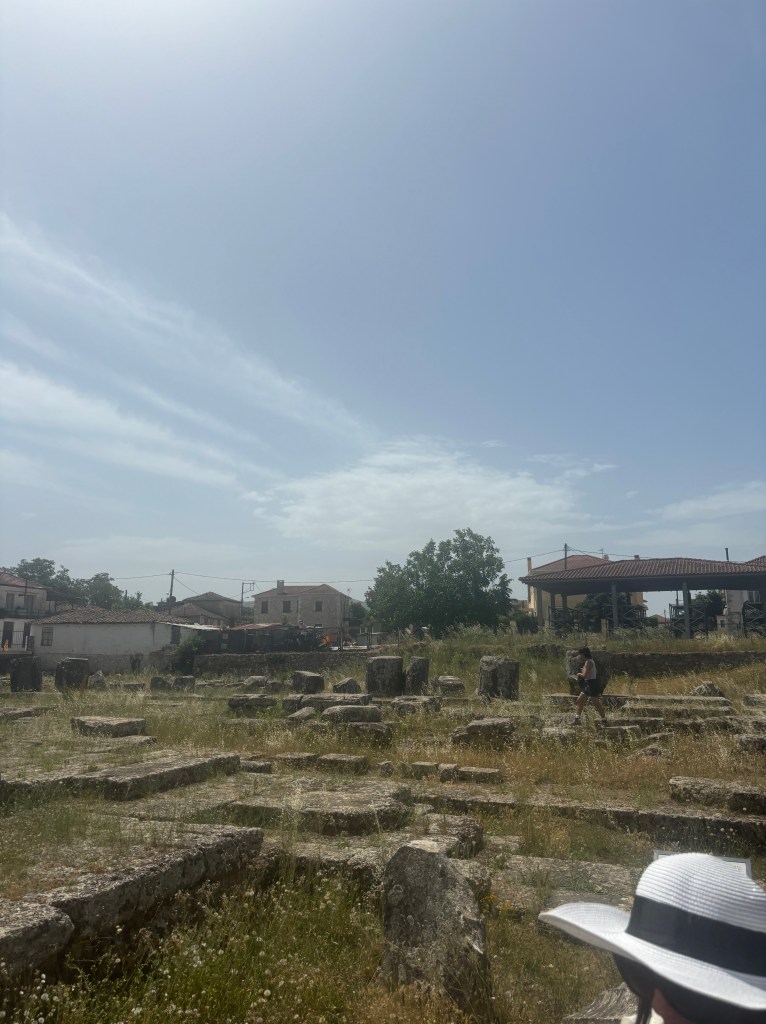
~Temple of Athena Alea.
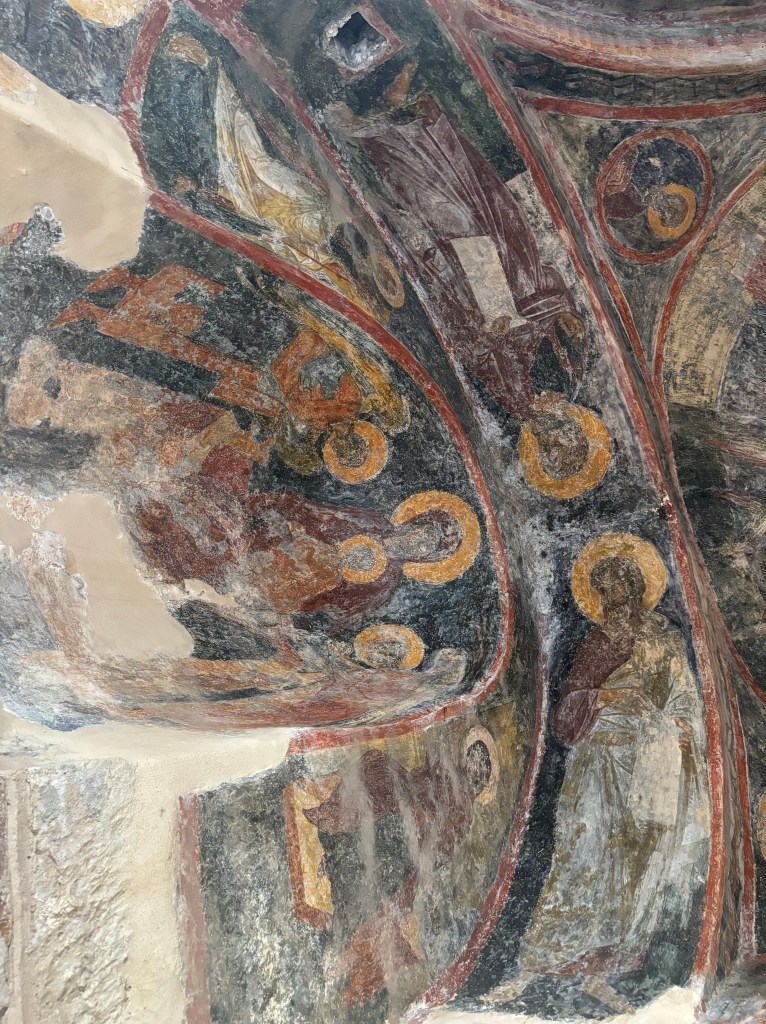
~A fresco in Mystras.
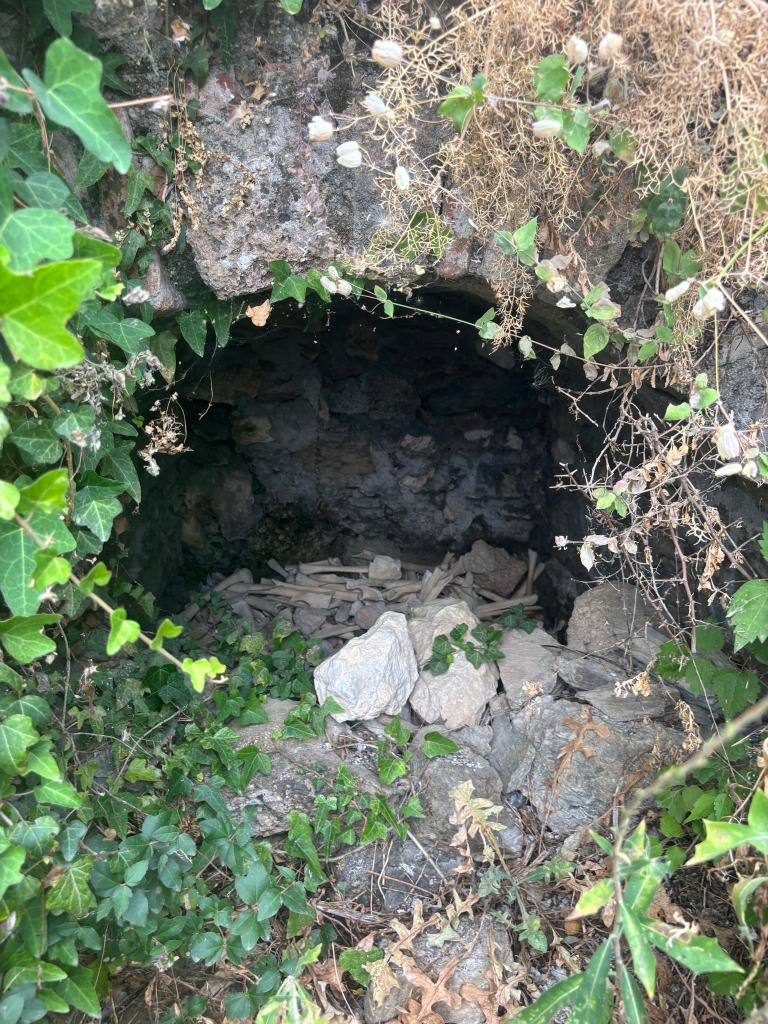
~A pile of animal bones found under the Church of Nikolaos.
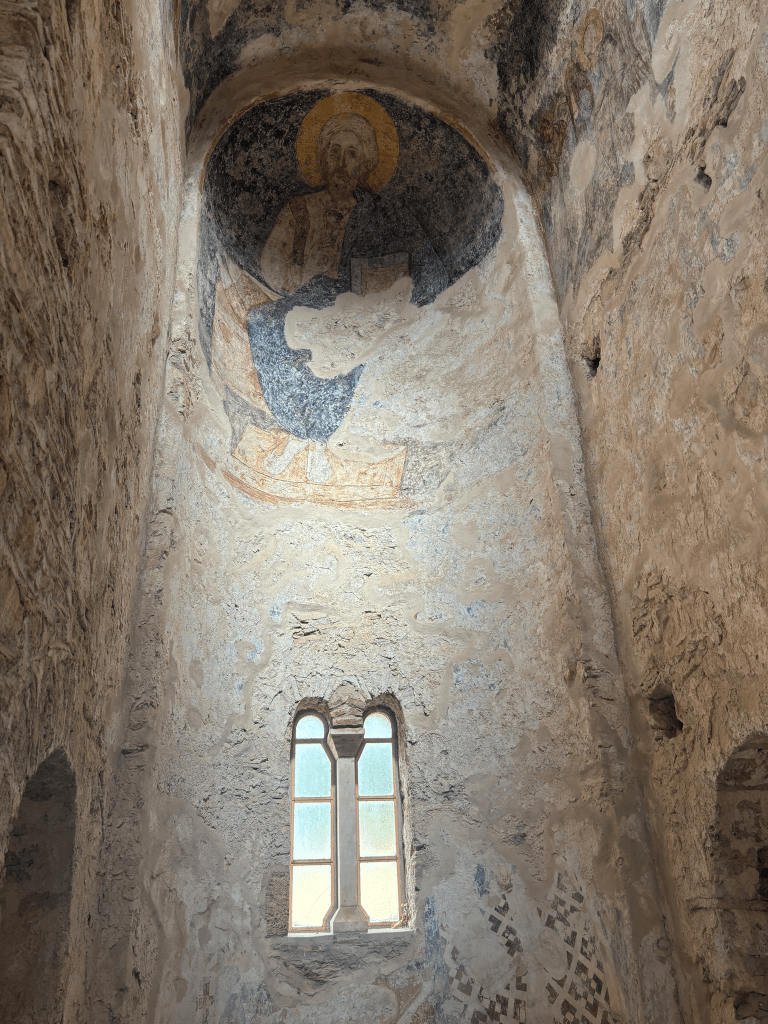
~A fresco in the Saint Sophia church.
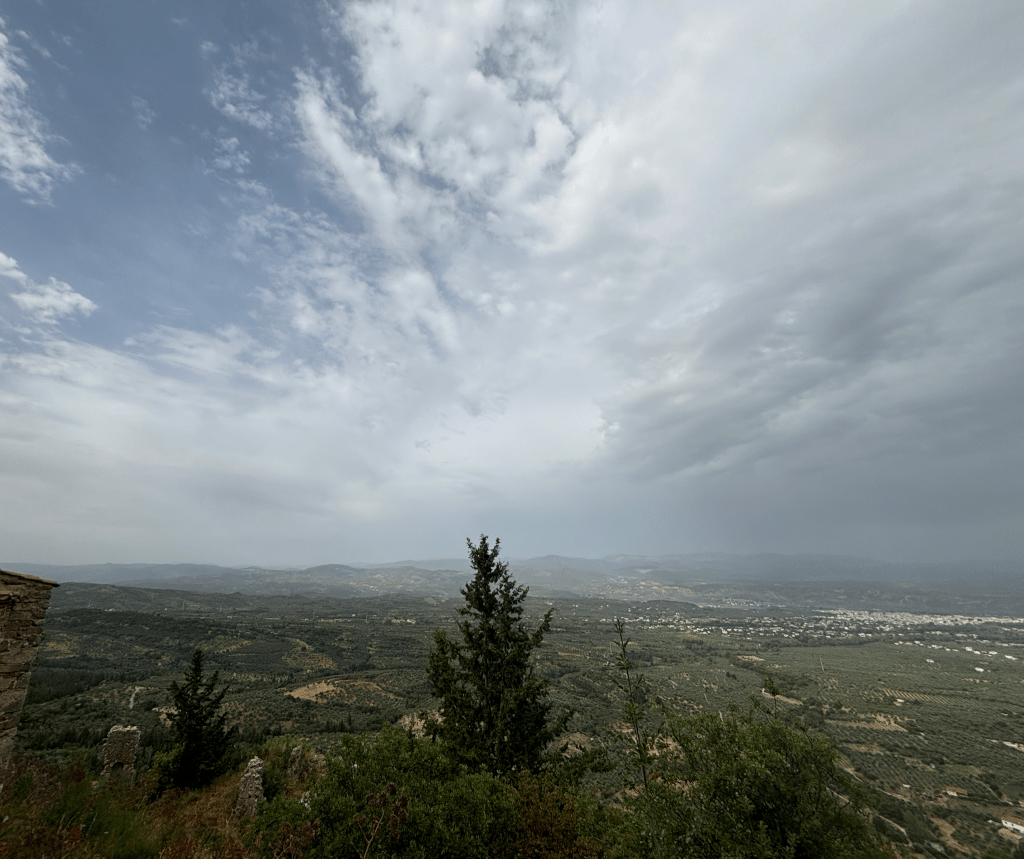
~A view walking down Mystras.

 Concordia CMLL Study Tour
Leave a comment