
By Kaylah Carruthers
Happy Tuesday June 11th! Today was lovely, with two sites, two presentations and two great tastings. First thing in the morning, we departed from Athens. On the way to Corinth, we quickly stopped at the Corinth Canal. The canal allows direct transit between the Aegean Sea and the Gulf of Corinth, making it essential for the Greek economy. The canal is only 8m deep (26 feet), and the narrowness often makes navigation difficult.
After the canal, we went to the site of Ancient Corinth and the Archaeological Museum of Ancient Corinth. Upon entry to the museum, visitors are welcomed by various headless statues in an open courtyard. Following a conversation with Dr. Francis, I learned that the bodies with the togas are often generic carvings. At the same time, the heads are purchased separately and commissioned to look like a given individual. The lack of heads is also due to the wear and tear of time, with marble heads often used for other purposes, e.g., to build a wall. From Dr. Francis, I also learned that the front of the foot of many statues is carved separately. At the museum, we saw two Kouroi (530- 520 BC) confiscated from antiquity smugglers at the modern village of Klenia in the Corinthia. The illegal excavations by the smugglers were followed by legal archaeological research at the site, which uncovered missing pieces of the Kouroi and an extensive cemetery. A low tumulus covered two sarcophagi sharing the same pit, which held the bones of two men aged around 35, who were displayed at the museum.
Cat then gave her informative presentation on The Temple of Apollo. The site has a long history of being associated with other Greek divinities, and as Cat told us in her presentation, the temple was dedicated to remains an active topic of debate. Built on the remains of an older temple, only seven columns stand of an original 38. Another one of the sites that we saw was where Glauce, the princess of Corinth, became Medea’s victim. After putting on a poisoned robe, she threw herself into a fountain, where she died. Today we saw the remains of said fountain. After the morbid thoughts, we took a group photo and a striking photo of Charles.
The drive to the olive oil production facility was lovely. The view of the water and its vibrant blue was striking when looking out the bus window. Ελαιοτριβείο ΜάρκελλουMarkellos Olive – Olive Oil tour & tasting was a delightful experience. One of the trees on the property was over 250 years old! We all learned a lot about the different kinds of olive oil and how to tell the difference between virgin olive oil that is falsely marketed and natural virgin olive oil: place it in your fridge! Olive trees can be produced for 1000 years, and more than 85 varieties have different olive oils and tastes. We learned that 2023 was one of the worst years for olive oil production in the last 50 years and that temperature is the enemy of high-quality olive oil.
The site of Nemea was an enjoyable experience because we could interact more directly with the temple itself. Daniela did an excellent job of explaining the history of the site. The earliest recorded modern visit was in 1766! The Sanctuary of Zeus at Nemea archaeological site was intended to host the Nemean Games, one of the four Panhellenic games. The games began in 573 BCE, and areas for religious worship, baths, athletic contests and commemorations were located on the site.
Ktima Palivou was a great way to end the day. Grapes have been growing in the region for over 3000 years, and the vineyard was established in 1995. The family owns 40 hectares of vineyards that are exclusively cultivated. The wines were very high quality. Everyone enjoyed a glass or two of wine in the company of Stella, the dog.
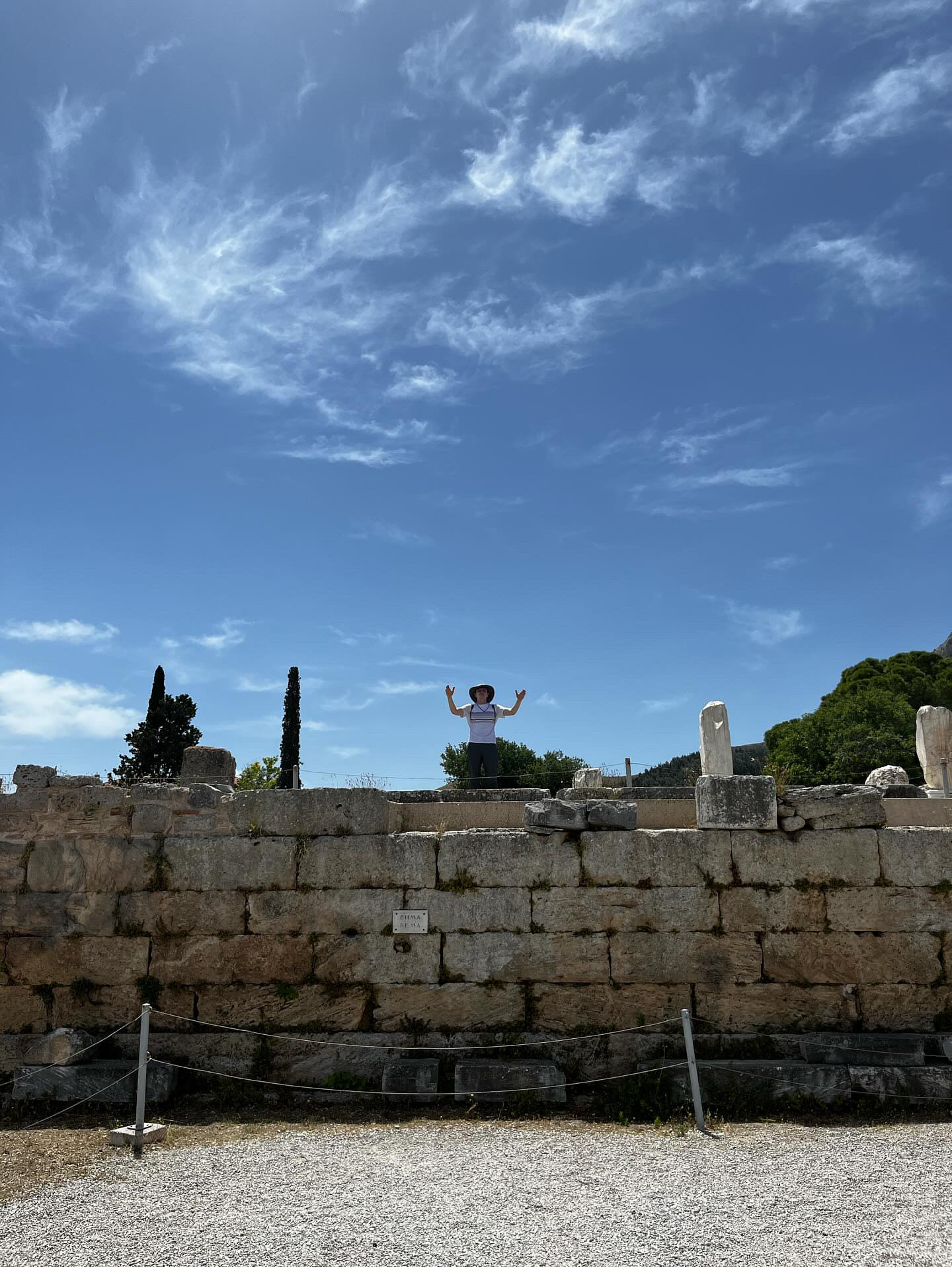
~Charles addresses the Corinthians on the bema at Corinth.
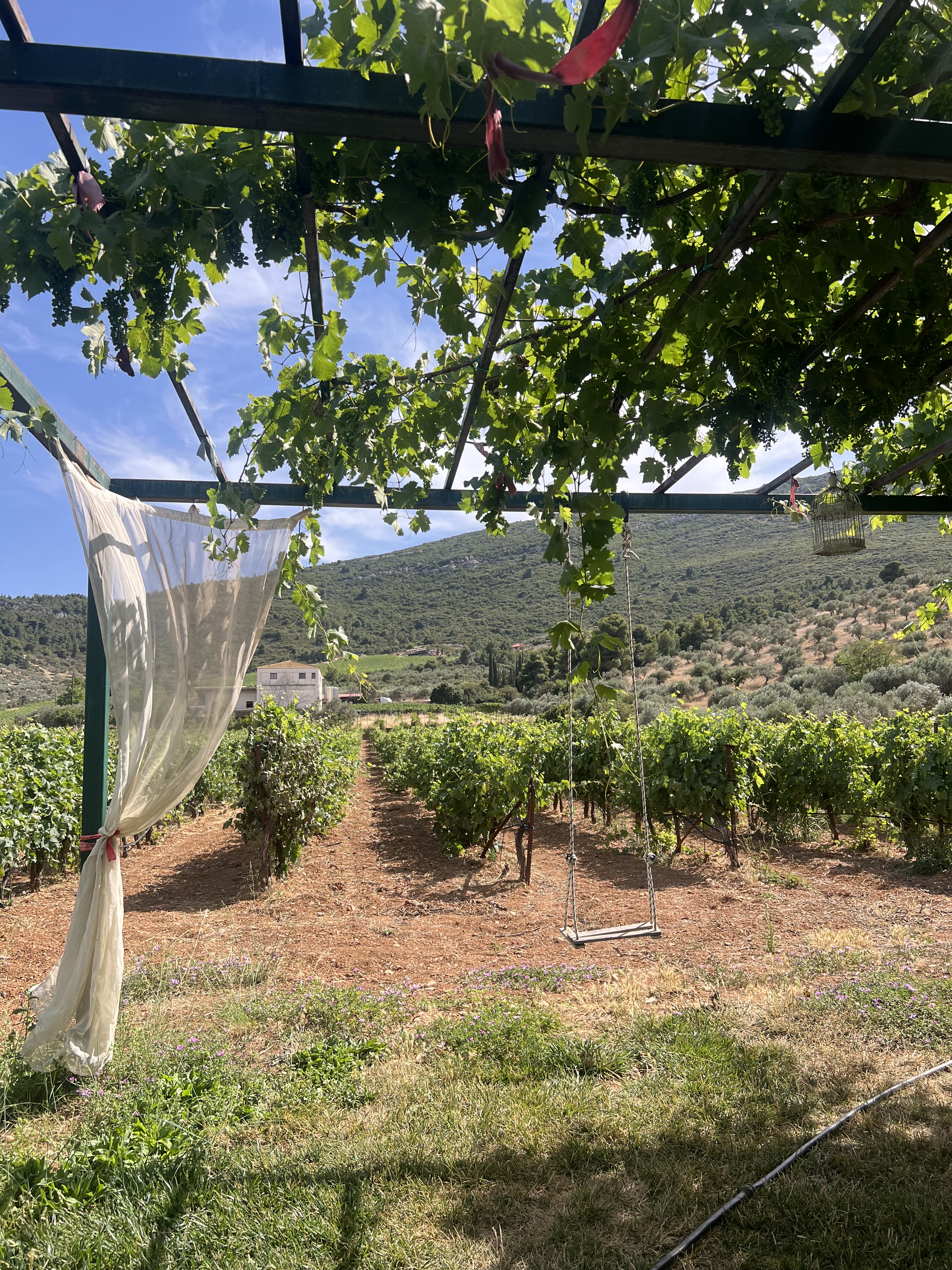
~Grape vines at the Palyvos winery.
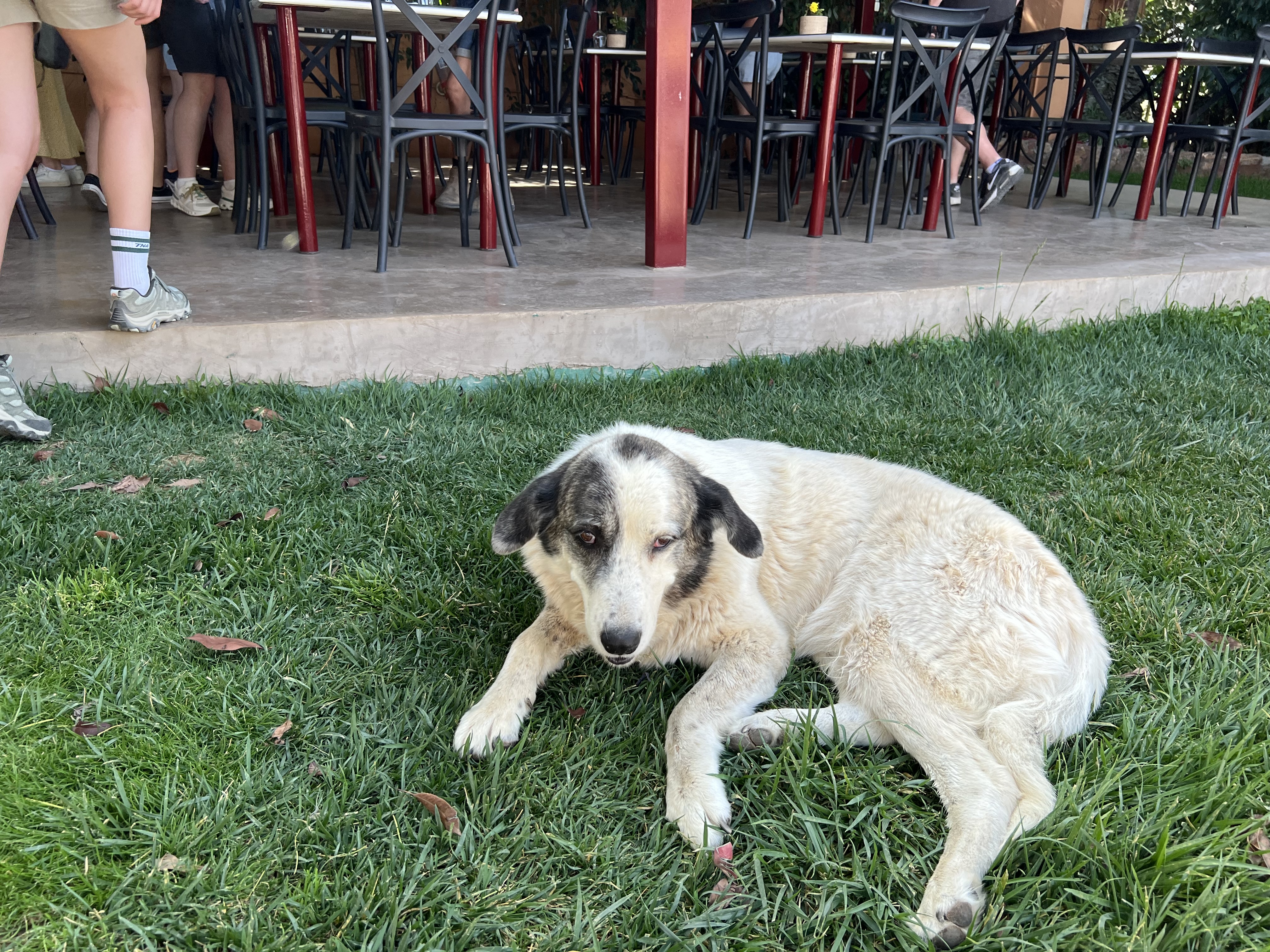
~Stella, the dog, Palyvos winery.
 Concordia CMLL Study Tour
Leave a comment